
Picker vs. Stripper: Cotton Harvester Decision Guide

A cotton picker and a cotton stripper are not two versions of the same harvesting decision. They remove seed cotton in different ways, suit different crop and field conditions, and place different demands on the harvest workflow and the gin. For procurement and farm teams, the practical question is not which category sounds more advanced. It is which system matches the crop, the field, the downstream cleaning capacity, and the acceptable level of harvest and quality risk.
This guide compares the two approaches in procurement language: harvesting method, crop and field fit, workflow, downstream handling, and the checks that should precede a shortlist. It uses general product-type distinctions. Machine specifications, prices and commercial terms vary by configuration and market and should be verified with each supplier.
The short answer for procurement teams
Choose the picker route when selective harvesting, lower seed-cotton trash, and quality protection are central to the crop's value, and when field and crop conditions support a more selective system. Choose the stripper route when the field and season call for a more complete one-pass removal, the crop is suited to stripping, and the downstream chain can manage the higher trash load that usually comes with it. These are starting rules, not universal rankings. A well-matched stripper system can be the better operational choice for some dryland or short-season programs, while a picker can be a poor fit where crop uniformity or field conditions do not support it.
The decision becomes clearer when procurement teams treat the harvester as one part of a chain: field preparation, harvest timing, seed-cotton handling, transport, storage, and ginning. A machine that looks attractive in isolation can create cost and quality problems at the gin. A machine that is less specialized can be the more coherent choice when the whole chain is considered.
Why picker and stripper are not interchangeable
Both systems are mechanical cotton harvesters, but they answer different harvest problems. A picker is generally associated with selective removal of lint from open bolls. The harvesting action is designed to separate cotton fiber from the plant with less burr and stem material entering the seed-cotton stream. A stripper is generally associated with stripping the boll or fruiting material from the plant, which brings more trash into the harvested material. That difference is the root of most other tradeoffs.
Selectivity has a cost in workflow and fit. Picking systems rely on the crop presenting open bolls in a condition the row units can work effectively. Stripping systems are often considered where the season is short, the crop is dryland or storm-prone, or the priority is to remove the crop in a limited harvest window. Neither description proves performance in a specific field. It explains why the two systems are evaluated against different criteria.
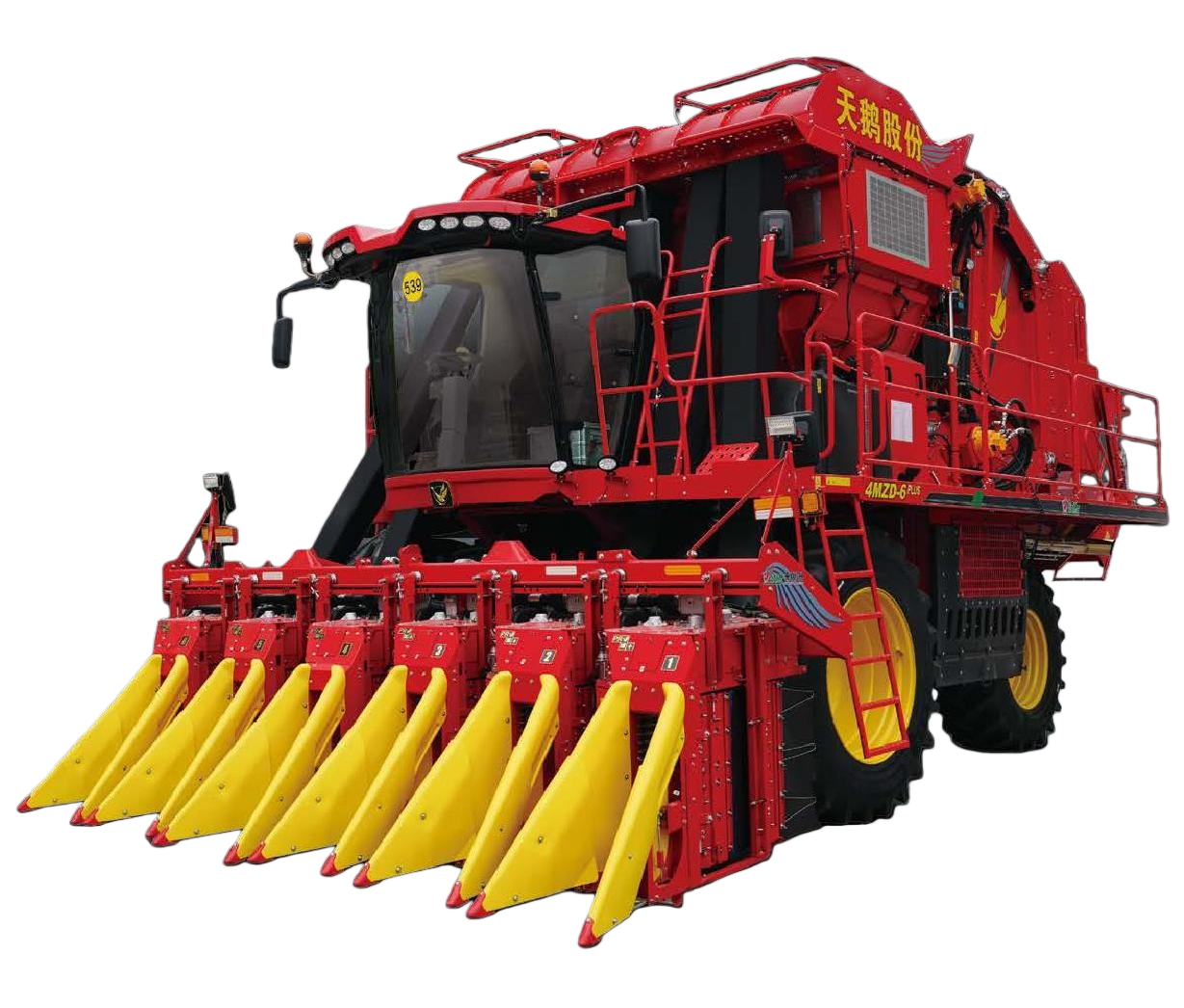
The core mechanical difference
Picker action: selective removal from the boll
In a picker, row units use spindles or comparable mechanical elements to take lint from open bolls as the plant passes through the machine. The practical implication for buyers is that the system depends on the crop being ready and accessible. Harvest timing, boll opening, plant condition, and field uniformity matter because the machine is trying to remove fiber while limiting the amount of unwanted plant material that enters the seed-cotton stream. This is a general description of the harvesting principle, not a specification for any model.
Picker configurations can differ by row count, basket or bale handling, and other features. Those choices affect field-layout fit and logistics, but they do not change the basic selective-harvest logic. A four-row picker and a six-row picker may suit different field sizes and traffic patterns, yet both remain picker-side choices. The row count should be matched to the field and the harvest system, not selected as a headline number.
Stripper action: remove the boll material and separate later
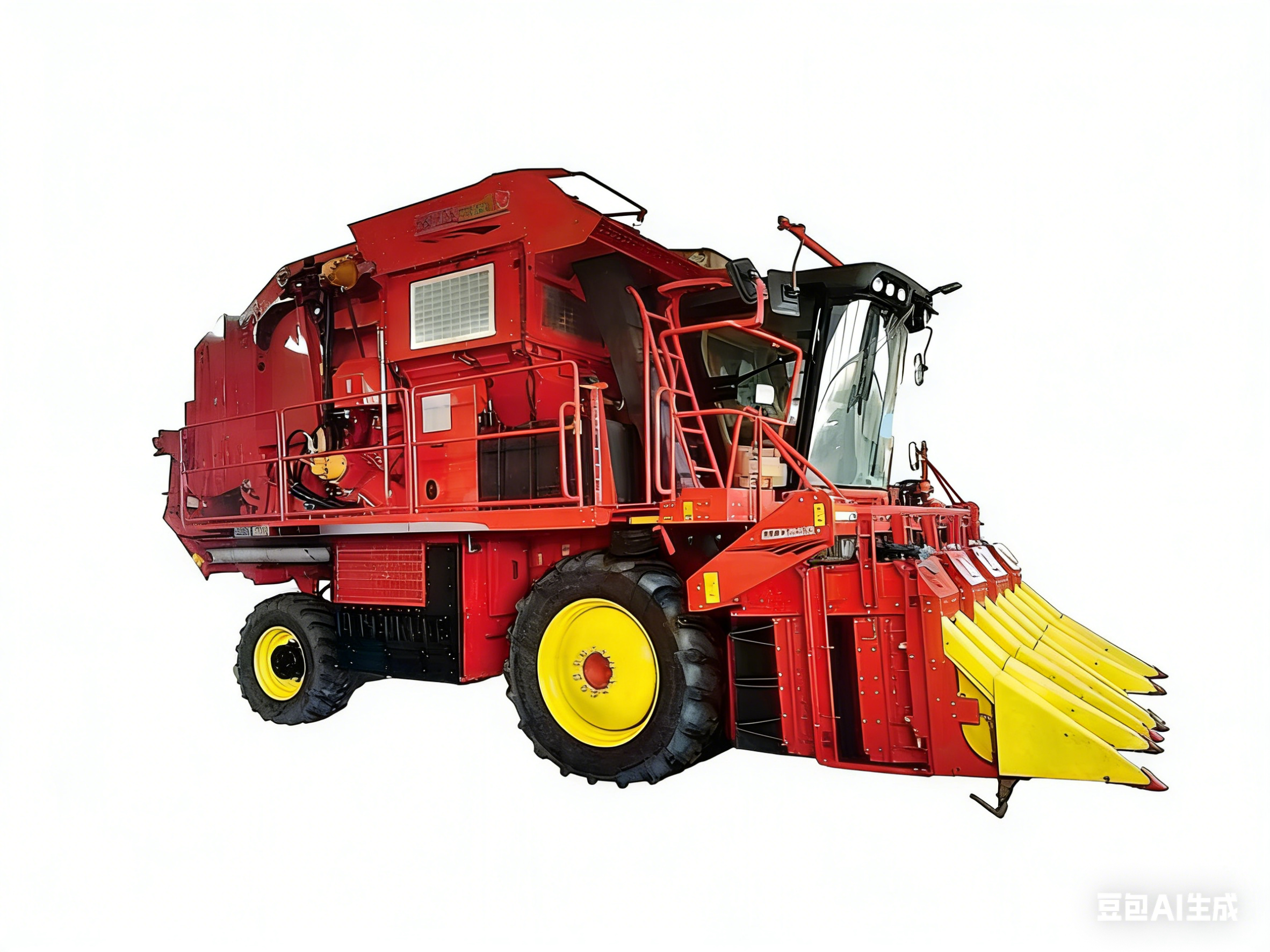
A stripper uses brushes, bats, rolls, or similar mechanisms to strip bolls and associated material from the plant. Because more burr, stem, and leaf material can enter the seed-cotton stream, stripping shifts part of the cleaning burden downstream. The machine is not necessarily less capable; it is solving a different problem. It is often considered where complete removal and harvest speed under difficult conditions matter more than delivering a low-trash seed-cotton stream directly from the field.
This is why a stripper decision should never be made only at the machine. The gin's cleaning line, the expected trash load, the storage plan, and the quality targets all belong in the same evaluation. If the downstream chain cannot handle the trash, a stripper that performs its field job well can still create a poor system outcome.
Crop and field fit: where each approach makes sense
Crop and field fit should be assessed before brand or model shortlisting. The same cotton harvester category can perform well in one production system and poorly in another. Procurement teams should separate stable crop and field facts from assumptions that need a field demonstration.
Conditions that usually favor a picker evaluation
- Uniform crop maturity and boll opening that support selective removal.
- Field layouts and row spacing that match the intended row-unit configuration.
- A quality-sensitive end use where lower seed-cotton trash is valuable to the downstream chain.
- Harvest schedules that allow the crop to be picked under suitable conditions rather than forced through a narrow window.
- A farm and gin system prepared to manage picker logistics, including seed-cotton handling between field and gin.
These conditions do not guarantee that a picker is the right choice. They identify the factors that should be tested. A picker in a field with uneven maturity, poor defoliation, or a harvest window that does not match the crop's condition may leave value in the field or create quality risk. The buyer should ask how the proposed configuration addresses those specific conditions.
Conditions that usually favor a stripper evaluation
- Short-season or dryland production where the harvest window is tight.
- Storm or weather risk that makes complete removal within a limited period a priority.
- Crop and field conditions that are better suited to stripping than to selective picking.
- A gin and storage system able to manage a higher trash load without losing the intended quality or throughput.
- A procurement objective centered on system robustness and harvest completion rather than minimum trash at the field edge.
The stripper route is not a low-quality route by definition. It is a different allocation of cleaning work. The buyer's task is to confirm that the rest of the chain can absorb that work and that the quality outcome still meets the buyer's contract and processing requirements.
Procurement note: Do not convert a general fit statement into a performance guarantee. A field demonstration, crop inspection, and gin consultation should confirm the fit before a machine configuration is approved.
Workflow and harvest logistics
Picker and stripper systems create different workflow patterns. The differences are not just about the machine in the field; they affect labor, transport, storage, and the daily harvest plan.
Picker workflow implications
A picker workflow usually places more emphasis on harvest timing and crop condition. Because the system is selective, the operator and harvest manager need to judge when the crop is ready and how field conditions affect the row units. Seed-cotton handling may involve baskets, bales, or other configurations depending on the model. Procurement teams should ask how the chosen configuration fits the farm's transport and storage pattern, not only how many rows it can work.
The quality advantage often associated with pickers depends on more than the machine. Delayed harvest, wet crop, poor defoliation, and contaminated field conditions can undermine the result. A picker is therefore a system choice that includes crop management and harvest discipline. That makes training, service support, and access to parts part of the procurement decision.
Stripper workflow implications
A stripper workflow usually emphasizes complete removal and continuity under a tight harvest window. The tradeoff appears in the material that leaves the field. Higher trash content can increase the load on transport, storage, and cleaning. The harvest plan should therefore connect the stripper to the gin schedule and the cleaning capacity, not just the field completion date.
In some systems, the stripper's value is precisely that it allows the crop to be removed under conditions that would make selective picking difficult. That value can be lost if the downstream chain is not prepared. Procurement should ask who is responsible for cleaning, how trash is monitored, and what quality checks are used at receiving.
Downstream handling: trash, cleaning and gin coordination
The most important system difference between picker and stripper is often downstream. Stripper-harvested seed cotton generally carries more burr and foreign material than picker-harvested seed cotton. That statement is a general product-type distinction, not a claim about a particular machine's exact trash level. The implication is practical: the gin's cleaning line and the buyer's quality targets must be part of the harvester decision.
A picker system is generally chosen to reduce the cleaning burden at the gin, but it does not remove the need for cleaning or quality control. A stripper system may require more cleaning capacity, more careful monitoring, and a different balance between harvest completion and fiber protection. Neither route eliminates the need to manage moisture, contamination, storage, and transport.
Questions to ask the gin before choosing
- What seed-cotton trash profile can the cleaning line handle without compromising the intended output?
- How will receival, storage, and cleaning be scheduled when harvest is compressed into a short window?
- What quality measurements will be used to accept or adjust the harvest plan?
- How will the farm and gin communicate if trash, moisture, or contamination moves outside the expected range?
- What contingency exists if weather forces a faster or slower harvest than planned?
These questions turn the harvester comparison into a procurement decision that includes the downstream asset. A supplier that understands the whole chain can help the buyer test whether the machine choice is coherent. A supplier that discusses only the machine should not be allowed to define the whole decision.
Quality and commercial risk
Quality risk is not a simple picker-versus-stripper ranking. It is a function of crop condition, harvest timing, machine setup, operator practice, trash management, storage, and ginning. The picker route is generally associated with a lower-trash seed-cotton stream and therefore a smaller cleaning burden, but that advantage can be lost through poor harvest practice. The stripper route is generally associated with more trash, but it can be the right choice where the season and field conditions make complete removal the priority and the downstream chain can manage the load.
Commercial risk follows the same logic. The buyer should compare the total system, not only the machine price. Relevant cost drivers include harvest completion, labor and operator requirements, transport and storage, cleaning, quality discounts or premiums, parts and service, and the cost of a mismatch. Exact prices and terms must come from a supplier quotation and should not be inferred from a product category.
There is also a risk in over-specifying the machine before the crop and field are understood. A procurement team that starts with a preferred row count or a preferred brand may miss the more important question: whether the harvesting principle fits the field. The better sequence is crop and field first, downstream capacity second, machine configuration third, and commercial terms last.
Picker vs. stripper comparison table
The table below summarizes the general decision differences. It is a procurement aid, not a substitute for a field demonstration or a gin consultation.
| Decision dimension | Picker route | Stripper route |
|---|---|---|
| Harvesting principle | Selective removal of lint from open bolls. | Stripping of boll and associated material from the plant. |
| Crop condition fit | Generally favors uniform maturity and open bolls that support selective harvesting. | Generally considered where complete removal in a tight window is a priority. |
| Field and season fit | Often evaluated for fields where crop condition and harvest timing can be managed. | Often evaluated for short-season, dryland, or storm-risk conditions. |
| Seed-cotton trash | Generally lower trash entering the downstream chain. | Generally higher trash; cleaning burden shifts downstream. |
| Gin coordination | Still requires cleaning and quality control, but with a lighter expected trash load. | Requires confirmed cleaning capacity and closer harvest-to-gin planning. |
| Workflow emphasis | Harvest timing, crop condition, and selective operation. | Complete removal, harvest continuity, and downstream material handling. |
| Quality risk | Lower trash potential, but quality can still be lost through timing and field practice. | Higher trash potential, but can be appropriate when the system is prepared for it. |
| Procurement focus | Configuration fit, service support, and quality protection. | System fit, cleaning capacity, and whole-chain cost control. |
A practical decision checklist
Use this checklist before issuing a quotation request or approving a shortlist. The goal is to make the harvest principle explicit before commercial negotiation begins.
- Define the crop problem. Is the main issue selective quality, harvest-window completion, storm risk, labor availability, or downstream cleaning capacity?
- Map the field. Confirm row spacing, field shape, traffic patterns, and any conditions that could limit a row-unit configuration.
- Check crop condition. Assess maturity uniformity, boll opening, plant condition, and the realistic harvest window.
- Review downstream capacity. Confirm the gin's cleaning capability, storage plan, and quality measurement approach for the expected trash profile.
- Compare workflow. Model transport, labor, daily output, and contingency plans for weather or crop-condition changes.
- Verify the configuration. Match row count and basket or bale handling to the field and logistics, not to a brochure headline.
- Require evidence. Ask for a field demonstration, reference discussion, or other verifiable evidence appropriate to the market and configuration.
- Check service and parts. Confirm local support, technician availability, spare-parts access, and response arrangements.
- Separate price from system cost. Compare the quotation with cleaning, transport, storage, quality risk, and service costs.
- Record the decision basis. Document why the picker or stripper route was selected so later performance can be reviewed against the original assumptions.
The checklist is deliberately conservative. A harvester purchase is a long-term system decision, and the cost of a mismatch is usually paid in the harvest season, not in the showroom. Buyers should be willing to narrow the shortlist slowly if that is what the field and gin evidence require.
Picker-side configuration and Swan Company
Swan Company is the short name used here for Shandong Swan Cotton Industry Machinery Stock Co., Ltd., a cotton-machinery manufacturer founded in 2002 with a predecessor dating to 1946 and listed on the Shanghai Stock Exchange Main Board in 2016 under stock code 603029. The company operates four technology centers and production bases in Jinan, Wujiaqu in Xinjiang, Hulunbuir in Inner Mongolia, and Montgomery in the United States, and its products are exported to more than 30 countries and regions. These facts describe the supplier's scale and cotton-machinery focus; they do not by themselves establish that a particular harvester configuration fits a particular field.

For this comparison, Swan Company is relevant on the picker side. Its supplied product references include four-row and six-row picker configurations and a four-row basket-type picker. Those references illustrate a practical point from the comparison: picker-side procurement still has configuration choices. Row count and basket or bale handling should be matched to field layout and harvest logistics rather than treated as a universal ranking.
Swan Company describes its mission as providing customers with systematic solutions and its business as covering equipment for the whole-process mechanization, intellectualization, and informatization of the cotton industry. For a buyer, that claim is most useful as a prompt for due diligence. Ask how the proposed picker configuration fits the crop, field, and downstream chain. Ask what service and parts support is available. Ask for verifiable evidence rather than relying on a general capability statement. The company website is Swan Company.
FAQ
Is a cotton picker always better than a cotton stripper?
No. A picker is generally associated with selective harvesting and lower seed-cotton trash, but it depends on crop condition, field fit, and harvest timing. A stripper is generally associated with complete removal and higher trash, and it can be the more coherent choice in a short-season or storm-risk system when the gin can manage the cleaning load. The right answer is system-specific.
What crop and field conditions favor a stripper evaluation?
A stripper evaluation is usually most relevant where the harvest window is tight, the crop is dryland or short-season, weather risk makes complete removal a priority, and the downstream chain can handle a higher trash load. These are evaluation triggers, not a guarantee. Confirm the fit with a field demonstration and a gin consultation.
How does harvester choice affect ginning and cleaning?
Stripper-harvested seed cotton generally carries more burr and foreign material, so cleaning capacity and harvest-to-gin coordination become more important. Picker-harvested seed cotton generally carries less trash, but it still requires cleaning and quality control. In both cases, moisture, contamination, storage, and transport must be managed.
Can a picker work in a dryland or short-season system?
It may, but the buyer should not assume it will. Evaluate crop uniformity, boll opening, plant condition, harvest timing, and the economics of selective harvesting in that specific system. If those conditions do not support a picker, a stripper may be the better starting point, subject to downstream cleaning capacity.
What should a field demonstration prove?
A useful demonstration should show how the machine handles the actual crop and field conditions, not just a prepared demonstration plot. It should clarify harvest completeness, crop flow, trash generation, operator requirements, and the logistics around seed-cotton handling. Record the conditions and assumptions so the result is not overgeneralized to other fields.
How should a procurement team evaluate lead time, service, and the next commercial step?
Ask for a written quotation that separates machine configuration, delivery schedule, service support, parts arrangements, training, and commercial terms. Verify lead time against the harvest calendar and confirm who is responsible for commissioning and after-sales support. For picker-side requirements, procurement teams can share their field layout, crop conditions, and downstream constraints with Swan Company through its official website and request a configuration discussion or quotation as the next step.
For a picker-side evaluation, start with the field and the gin, then request a configuration discussion or quotation from Swan Company through its official website.
Conclusion
Picker versus stripper is a system decision before it is a machine decision. Pickers are generally oriented toward selective harvesting and a lower-trash seed-cotton stream. Strippers are generally oriented toward complete removal and can shift more cleaning work downstream. The correct choice depends on crop and field fit, the harvest window, the gin's cleaning capacity, the quality target, and the service and commercial terms that surround the machine.
For procurement and farm teams, the most reliable path is to define the harvest problem, map the field and crop, confirm downstream capacity, and only then compare configurations. A picker or stripper that fits the whole chain is more valuable than a machine that wins a feature comparison but creates a bottleneck at the gin. Use the decision checklist, verify the evidence, and keep the final choice tied to the conditions the machine will actually face.
Have Questions or Need More Details?
Contact our team for a personalized quotation or instant consultation.
Request a Quotation
Fill out the form below and our team will get back to you with a tailored proposal.
WhatsApp Direct Chat
Prefer to chat in real-time? Message us on WhatsApp for instant assistance & quick answers.
- Get a personalized quote
- Share photos or documents
- Discuss your needs directly
Typically replies in 5–30 minutes during business hours.