Decoding Cotton Harvester Specs: How Technical Parameters and Manufacturing Quality Determine Field Performance
When you compare cotton harvesters, the specification table tells you what a machine is supposed to do. What it does not tell you is how long it will keep doing it. The same row count, the same bale or basket format, and the same self-propelled platform can deliver very different results depending on manufacturing discipline, quality control, and the experience of the people who build it.
This guide is written for farm owners, procurement managers, and contractor operators who want to interpret cotton harvester specifications correctly and evaluate manufacturing quality before they make a purchase decision. Shandong Swan Cotton Industry Machinery Stock Co., Ltd. is used as a reference manufacturer throughout the guide. Swan is a publicly traded cotton machinery company headquartered in Jinan, Shandong Province, China, with four major technology centers and production bases in Jinan, Wujiaqu in Xinjiang, Hulunbuir in Inner Mongolia, and Montgomery in the United States.
By the end, you should be able to read a typical cotton harvester spec sheet with more confidence and know what factory-level evidence supports a reliable machine.
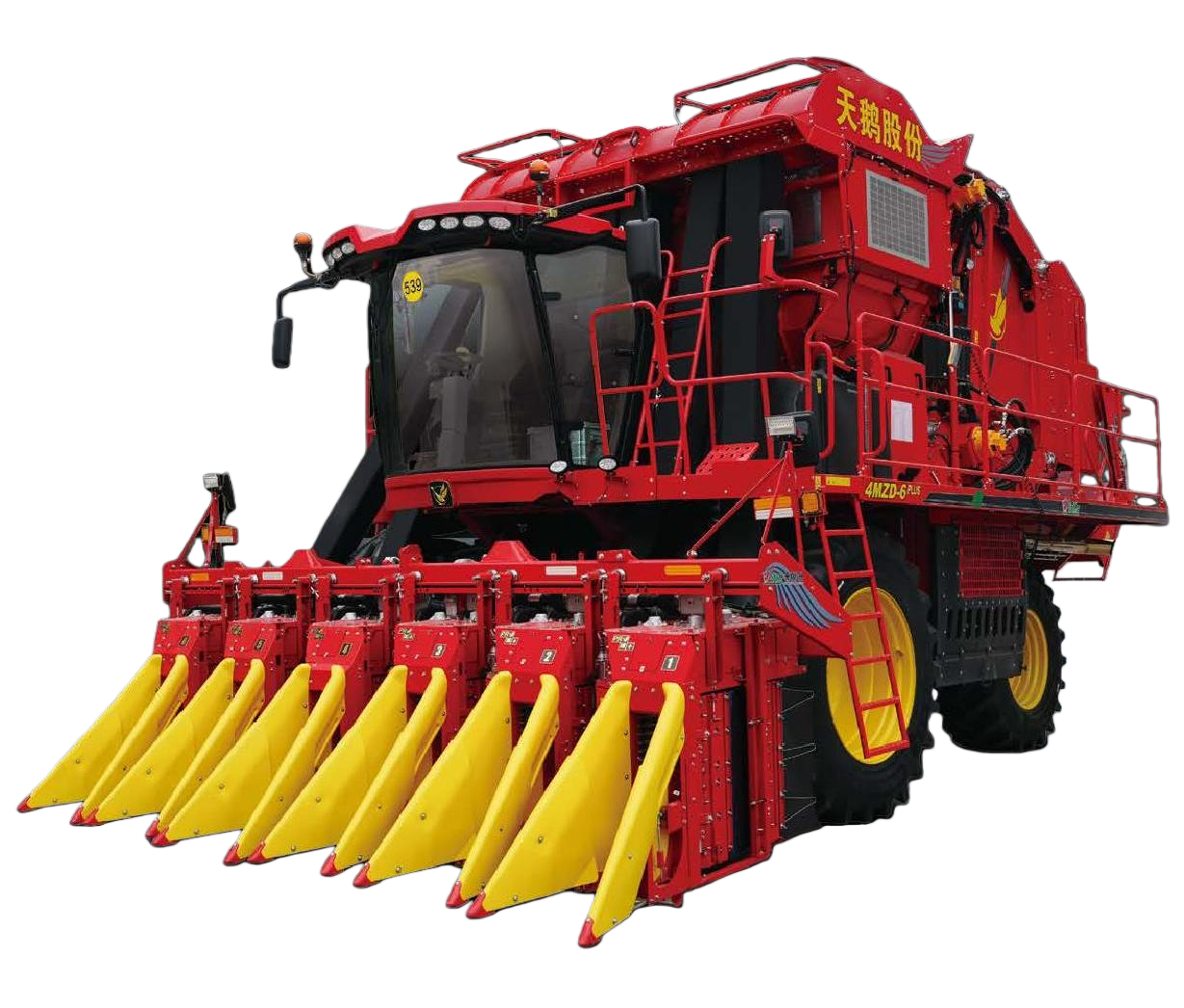
Swan six-row self-propelled cotton picker
Why Technical Parameters Alone Are Not Enough
A machine can spend more time in the workshop than in the field if its manufacturing process is weak. Buyers often focus on visible parameters such as the number of rows, bale vs basket configuration, or engine power. Those parameters are important, but they are only useful when the machine is built to convert that specification into productive harvesting hours.
Common problems include inconsistent welding on the picking frame, unprotected wiring and hoses, poor sealing of hydraulic connections, inadequate paint preparation, and insufficient inspection during assembly. These issues rarely appear on a spec sheet, but they affect uptime, maintenance costs, and final cotton quality.
A serious buyer should therefore ask two questions in parallel: What does this parameter mean for my farm? and How does the factory ensure the machine achieves that parameter in real field conditions?
Industry Background: From Simpler Machines to Multi-Row Platforms
Cotton harvesting has become a fully mechanized operation in most large cotton-producing regions. The shift from manual picking to mechanical harvesting has created demand for machines that can work quickly, reduce labor dependence, and preserve fiber quality. Self-propelled multi-row harvesters are increasingly common because they combine high capacity with lower labor requirements.
Swan's history touches this evolution directly. The company's predecessor was established in 1946, and the current company was founded in 2002 as a listed enterprise controlled by Shandong Supply and Marketing Cooperative. In 2016, it listed on the Shanghai Stock Exchange Main Board under stock code 603029. This long operating history is relevant to buyers because it indicates continuity in engineering and service, not just product availability.
The company states that its products are exported to more than 30 countries and regions, and it reports a first-place position in new market share of complete sets of cotton processing machinery both domestically and internationally. It also holds more than 190 national invention patents and has participated in formulating 25 national and industry standards.
How to Read Cotton Harvester Technical Parameters
Row Count and Pass Width
The row count in a specification, such as four-row or six-row, tells you how many rows of cotton the machine can harvest in a single pass. More rows increase theoretical capacity and reduce the number of passes needed for a field. However, a wider machine also requires more turning space and places more demand on the operator and the power unit.
Swan's self-propelled cotton picker range includes four-row and six-row models, as shown by its Six-row Cotton Picker and Four-row Cotton Picker equipment. The right row count depends on field size, row spacing, typical field geometry, and whether the machine will be used by one farm or by custom harvesting operators.
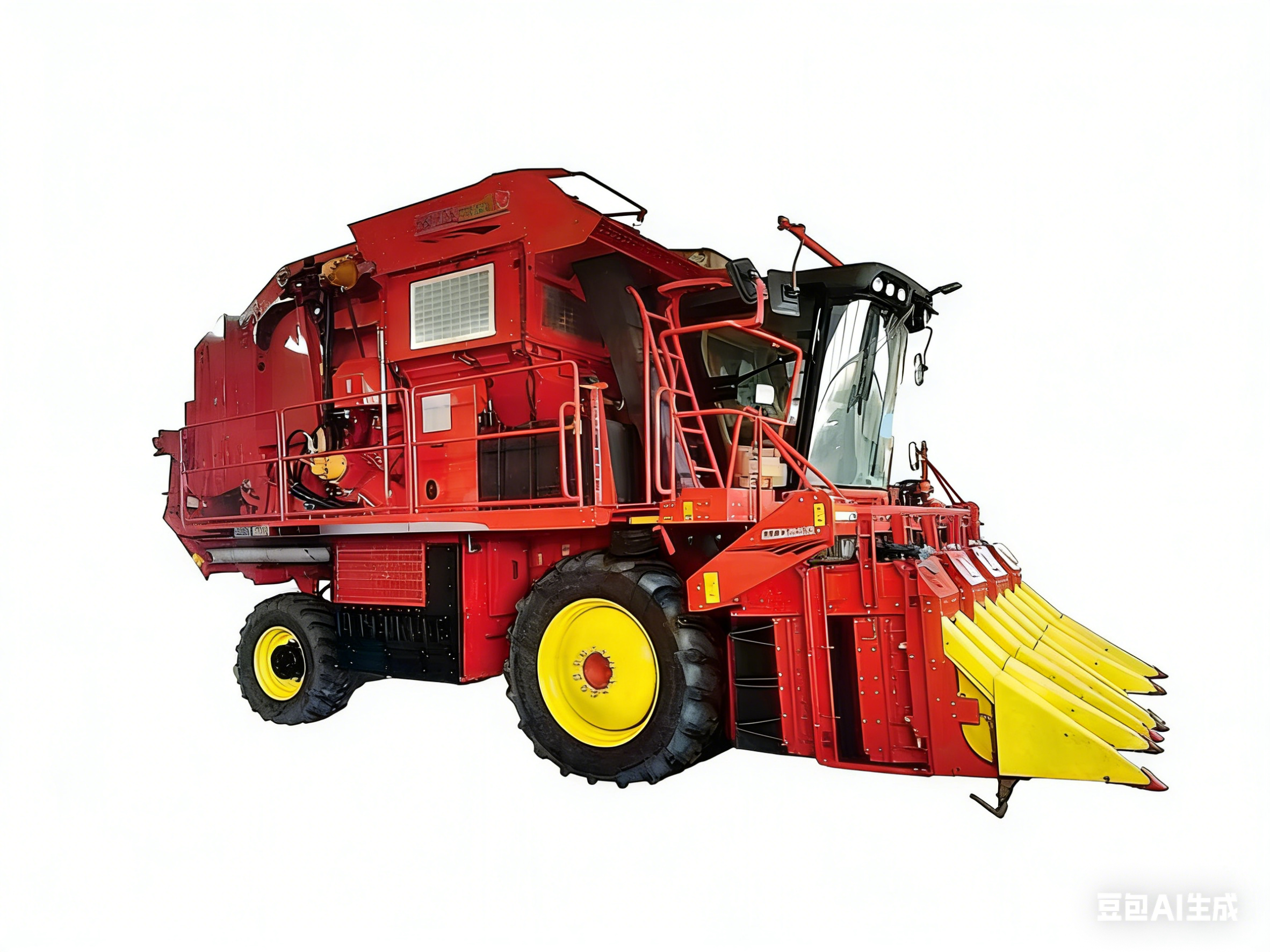
Swan four-row cotton picker
Bale Type vs Basket Type Configuration
This choice affects the entire logistics chain after cotton is picked. A bale-type harvester forms the harvested seed cotton into a compact bale on the machine. A basket-type harvester collects cotton loosely in a basket that must be emptied into a module builder, boll buggy, or trailer.
The practical trade-off is not simply capacity. Bale-type harvesters reduce the number of support vehicles in the field and make long-distance transport easier. Basket-type systems may be more familiar in regions with an existing module system or where a farm already has the matching handling equipment.
Four-row and six-row examples can be found in both bale and basket configurations. Swan also produces basket-type four-row pickers, which gives buyers a choice between formats depending on farm infrastructure.

Swan basket-type cotton picker configuration
Self-Propelled vs Tractor-Mounted Design
Self-propelled harvesters carry their own engine and drive system. They generally offer more power, better visibility, and a purpose-built chassis designed for cotton harvesting. Tractor-mounted units are often lower-cost and more flexible because they use an existing tractor, but they may have lower capacity and a more demanding setup process.
When comparing self-propelled machines, look at the complete mobile platform rather than only the engine rating. The quality of the hydraulic system, steering, cleaning fans, and picking unit matters more than a single headline number.
Power, Hydraulics, and Drive System
Although engine power is an easy number to compare, it does not tell you how efficiently the machine transfers that power to the picking drums, cleaning fans, and ground drive. A well-integrated hydraulic system that runs cool and responds smoothly will provide more productive hours than a slightly more powerful engine paired with weak components.
For procurement teams, the useful question is: Can the manufacturer show how the machine performs under continuous load during the cotton season?
Operator Controls and Monitoring
Modern harvesters use monitors to show picking speed, bale status, and machine diagnostics. The readability of these controls and the quality of the sensors affect operator accuracy and maintenance response. While this is not a strict engineering parameter, it is a real factor in daily throughput.
How Manufacturing Process Affects Cotton Harvester Quality
From Parts to Finished Machine
Manufacturing quality begins before the final assembly line. Material selection, machining tolerances, welding, painting, wiring, and testing all determine whether a machine's published parameters remain true in the field.
Swan's manufacturing system is based on precision manufacturing combined with research and development, marketing services, and capital operation. The company operates through six holding subsidiaries and four branch technical service centers, with production bases in China and the United States.

Assembly and parts workshop at Swan
The Role of Dedicated Quality Inspection
One of the strongest signals of manufacturing quality is the presence of a dedicated inspection process. Swan's facilities include quality inspection departments and technical teams that check machines and components before delivery. This is visible in the company's factory records, which show quality inspection personnel working around production.
For a buyer, a factory inspection or a video call inside a parts workshop can be more valuable than an extra line on a brochure. Look at how components are stored, how operators handle fittings, and whether the assembly area is organized.
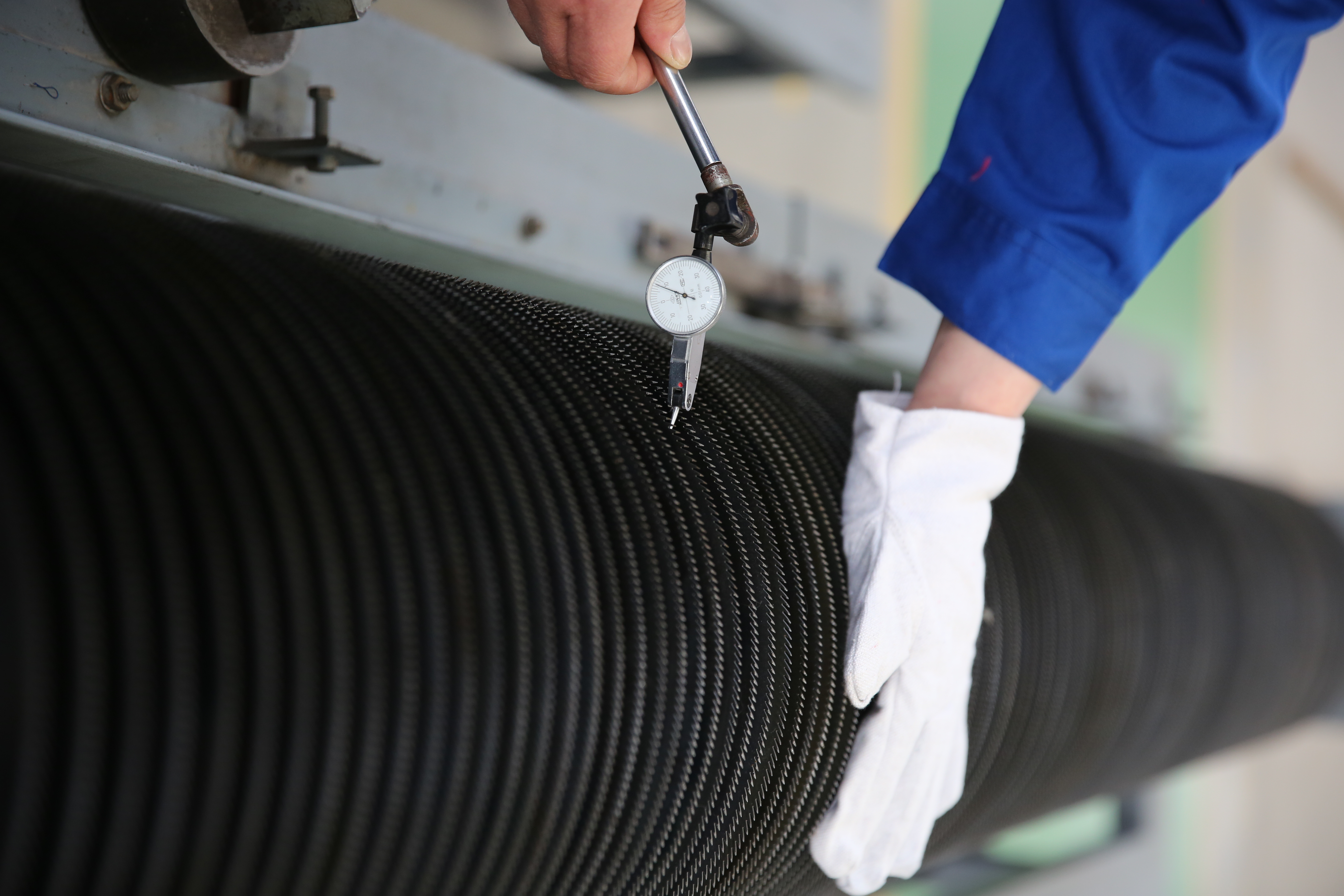
Swan quality inspection team
Certifications and Standards Participation
Certifications provide a clearly defined baseline for compliance and safety. Swan has obtained the China Compulsory Product Certification for its products. Participating in national and industry standards also signals that a manufacturer understands the regulatory environment and is willing to be measured against public requirements.
The company's record includes more than 190 national invention patents, participation in 25 national and industry standards, and multiple honors at or above the provincial and ministerial level, including the National Second Prize for Progress in Science and Technology.
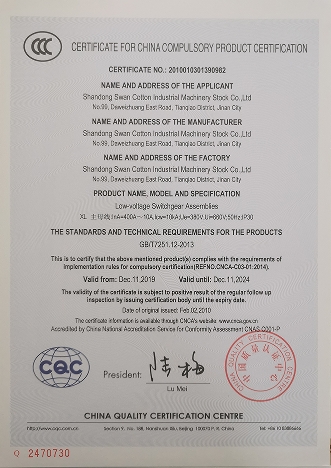
Swan CCC certification
After-Sales Service and Parts Availability
Manufacturing quality is also reflected in the service network. A harvester is valuable only when it is running during the harvest window. A manufacturer with local service locations and a spare-parts support system reduces the risk of long downtime.
Swan has built a marketing service network covering major cotton-producing areas worldwide, with four branch technical service centers. Its global footprint also includes production bases in Xinjiang, Inner Mongolia, and Montgomery, which support regional customers.
Step-by-Step: How to Evaluate a Cotton Harvester Before Purchase
- Define the harvest challenge. Calculate field size, row spacing, expected yield per acre, harvest window, and labor availability.
- Translate parameters into throughput. Use row count and working speed to estimate hectares per day. Add time for turning, unloading, and maintenance.
- Compare bale and basket formats against your logistics. Decide whether the machine's output matches the trucks, module builders, and storage equipment you already own or plan to buy.
- Inspect the production process. Ask for photos or videos of welding, painting, harness assembly, and test runs. Better still, arrange a factory visit or video audit.
- Verify quality signals. Check certifications, patents, standards participation, and the existence of a formal quality inspection team.
- Evaluate service capacity. Ask about spare parts availability, local service points, response time, and operator training manuals.
- Demand evidence, not adjectives. Ask for contactable customers in similar conditions, or at least documented service history.
Typical Use Cases for Different Configurations
Large Flat Farms
For large farms with uniform rows and long harvest runs, a six-row self-propelled bale type cotton harvester reduces the number of passes and limits field traffic. Bale formation makes it easier to move the product out of the field without a large supporting fleet.
Medium Farms with Existing Trailers or Module Systems
A four-row self-propelled basket type cotton harvester can be a better fit when the farm already has boll buggies or module builders. The lower complexity of basket handling is an advantage in well-established systems.
Custom Harvesting Operators
Contract harvesters need machines that can move from farm to farm. A four-row self-propelled bale type model offers a balance of capacity and transportability. Bale output also reduces the need to coordinate with different farmers' equipment.
Farms Transitioning from Manual or Tractor-Mounted Harvesting
A self-propelled machine with a simpler row configuration gives operators time to learn. Even if a farm eventually needs a larger unit, starting with a four-row machine builds confidence and infrastructure.
Bale Type vs Basket Type: A Practical Comparison
| Comparison Point | Bale Type Cotton Harvester | Basket Type Cotton Harvester |
|---|---|---|
| Output format | Forms a compact bale on the machine | Collects loose seed cotton in a basket |
| In-field unloading | Bale is ejected at row ends or designated points | Basket is dumped into a boll buggy, module builder, or trailer |
| Support vehicles | Fewer support vehicles are needed in the field | More supporting equipment may be required |
| Transport and storage | Bales can be moved directly to storage or gin | Loose cotton usually needs to be consolidated and covered |
| Labor intensity | Less manual handling after picking | More coordination and labor around unloading |
| Best suited for | Large fields, long transport distances, custom operators | Farms with existing module systems or short transport routes |
This comparison is a framework rather than a fixed rule. The right choice depends on the entire cotton handling system on your farm.
Frequently Asked Questions
What certifications and standards should a cotton harvester manufacturer have?
At a minimum, look for compliance with compulsory product certification in the target market. For example, products intended for the Chinese market commonly carry China Compulsory Product Certification. Participation in national and industry standards is another strong signal. Swan, for instance, has obtained CCC certification and has participated in formulating 25 national and industry standards.
How do I choose between a four-row and a six-row cotton harvester?
Choose the row count based on field size, row spacing, harvest window, and logistics. A six-row machine harvests more rows per pass and can cover more hectares in a day, but it needs more turning space and a higher investment. A four-row machine is more maneuverable and can be a better match for medium-sized fields or farms with divided plots.
Does a bale-type cotton harvester require a different logistics system than a basket-type machine?
Yes. A bale-type harvester produces compact bales that can be transported with fewer support vehicles. A basket-type harvester unloads loose cotton into boll buggies, module builders, or trailers, so the farm needs compatible unloading and transport equipment. The choice should be made based on your existing handling system.
Can I request a quotation or factory visit before buying?
Yes. A serious manufacturer should be willing to discuss configuration, pricing, factory visits, and demonstrations. For Swan machines, you can contact the sales team directly. Pat is available by WhatsApp at +86 13791009388 or email pat_666@163.com; Eric is available by WhatsApp at +86 15169092038 or email ericwong9527@163.com. A direct conversation is often the fastest way to confirm availability and specifications.
What is the typical lead time for a cotton harvester order?
Lead time depends on the model, configuration, production scheduling, and destination. Since cotton harvesters are complex machines, manufacturing and inland logistics must be considered together. Contact the manufacturer with your main harvest season and preferred configuration to receive a current lead-time estimate.
Conclusion
The best cotton harvester is not the one with the most impressive row count or the largest bale capacity. It is the machine that can sustain the required performance throughout the harvest season, supported by a manufacturer that builds carefully, tests honestly, and responds quickly when service is needed.
Technical parameters give you the outline of a machine. Manufacturing quality gives you the proof. Use both when you compare models, and visit the factory or its people whenever you can. If you are evaluating Swan, the company's production bases in China and the United States, its history as a listed company, and its engineering record provide a solid starting point for further conversation.

Swan Xinjiang branch service base
Want to see how Swan cotton harvesters are built? Request a quote, a catalog, or a factory visit from the Swan team today.
Website: www.swancottonmachinery.com
Pat: +86 13791009388 / pat_666@163.com
Eric: +86 15169092038 / ericwong9527@163.com
Have Questions or Need More Details?
Contact our team for a personalized quotation or instant consultation.
Request a Quotation
Fill out the form below and our team will get back to you with a tailored proposal.
WhatsApp Direct Chat
Prefer to chat in real-time? Message us on WhatsApp for instant assistance & quick answers.
- Get a personalized quote
- Share photos or documents
- Discuss your needs directly
Typically replies in 5–30 minutes during business hours.