Matching Cotton Ginning Equipment to Your Project: A Scenario-Based Selection Guide
Selecting a cotton ginning machine is rarely about choosing the largest available model. It is about aligning machine capacity, plant layout, power supply, seed processing needs, automation level and total budget with the project that actually exists on the ground. A cotton ginning plant designed for a regional crop, a ginner upgrading one line, and an investor setting up a new processing facility all need different answers.
This guide uses verified product specifications from Shandong Swan Cotton Industrial Machinery Stock Co., Ltd., referred to as Swan Company, together with published industry data, to show how buyers can make a scenario-based equipment decision. The goal is to help procurement teams move from a vague request for a cotton ginning machine to a specific, buildable cotton ginning line or complete cotton ginning solution.
Why Cotton Ginning Projects Need Scenario-Based Selection
The central problem in cotton ginning procurement is that the same term, cotton ginning machine, covers equipment with very different output, power consumption, footprint and integration level. Two buyers can both say they need cotton ginning equipment, but one may need a single high-capacity saw gin while the other needs a complete cotton ginning plant with seed cotton cleaning, ginning, bale pressing, linter cleaning and seed delinting.
When the project scenario is not defined clearly, the common failure pattern is predictable. A buyer selects a machine first, then tries to make the plant fit the machine. The result is often an oversized line that is expensive to operate or an undersized line that cannot process contracted seed cotton within the season. For Research and Evaluation stage buyers, the correct sequence is to define the project constraints before comparing machine brands or models.
Project constraints usually include the expected output in kilograms per hour, available electrical power, building dimensions, seed cotton supply pattern, automation requirements, and whether the scope is a single replacement machine or a complete cotton ginning line. Once these constraints are clear, equipment specifications become decision evidence instead of marketing information.
Industry Background: Market Growth and the Shift to Automation
Published third-party data points to continued expansion of the cotton ginning machinery market. According to Market Research Future, the global cotton ginning machine market was estimated at approximately USD 2.07 billion in 2024 and is projected to reach USD 3.36 billion by 2035. For project planners, this suggests sustained demand for ginning capacity in major cotton-producing regions.
Precision Business Insights expects Asia Pacific to account for around 55 percent of the cotton ginning machinery market by 2026, driven by high production volumes in India and China. This regional concentration matters for buyers because suppliers serving Asia Pacific tend to build equipment for high throughput, continuous operation and integration with existing seed cotton supply chains.
Dataintelo identifies automatic ginning machines as the fastest-growing segment, with a compound annual growth rate of 6.8 percent, as they replace manual and semi-automatic systems. Buyers planning a new cotton ginning line should therefore evaluate not only today's labor model but also the automation path they will need in the next five years. A semi-automatic cotton ginning machine may have a lower initial cost, but an automatic cotton ginning system can reduce labor dependency and improve process consistency.
The market distinction between saw gin and roller gin machines is also part of scenario planning. Saw gins are widely used for upland cotton, while roller gins are generally associated with long-staple varieties. The product specifications in this guide focus on saw gin models and a seed delinter, which form the core equipment range for many medium and large cotton ginning plants.
Detailed Solution: A Full-Scope Equipment Range
Swan Company, whose predecessor was founded in 1946, is a Chinese cotton machinery manufacturer and a listed company owned by Shandong Supply and Marketing Cooperatives. Its headquarters in Jinan covers an area of 83,430 square meters. The company also operates a branch in Xinjiang covering 31,970 square meters and a branch in Inner Mongolia covering 53,000 square meters. The stated workforce is approximately 858 employees, and the company reports an annual output of 2,200 units.
The company's main products include Cotton Gin, Bale Press, Linter Cleaner, Saw Delinter, Seedcotton Cleaner, Cotton Picker, Grain Drying System and Grain Combine Harvester. That range matters for project-fit decisions because a cotton ginning plant is not just a gin. A complete cotton ginning solution needs matching equipment for seed cotton preparation, lint handling, bale pressing and cottonseed processing.
Within the cotton ginning equipment line, three specifications are particularly useful for scenario planning.
MYZ215-14.8: High-Capacity Saw Gin
The MYZ215-14.8 is a saw gin designed for a large cotton ginning line. Its designed output is 2,000 to 3,000 kilograms per hour, with equipped power of 108.8 kW. The machine has 215 saws, each 406 mm in diameter, with 14.8 mm spacing between saws. The brush cylinder diameter is 450 mm.
Its overall dimensions are 4,720 x 3,688 x 3,558.5 mm, and the machine weight is 12,000 kilograms. The seed cotton inlet measures 3,328 x 320 mm, and the lint outlet measures 3,310 x 120 mm. The material specification includes stainless steel, alloy, carbon steel and copper. For a high-capacity cotton ginning plant, the MYZ215-14.8 provides the throughput needed to match large seed cotton supply.
MY158-17: Medium-Capacity Saw Gin
The MY158-17 is a seed cotton ginning machine with a designed output of 1,100 to 1,800 kilograms per hour. Equipped power is 64.75 kW, and the machine contains 158 saws with a diameter of 406 mm and 17 mm saw spacing. The brush cylinder diameter is 380 mm.
The overall dimensions are 3,138 x 4,068 x 3,508.5 mm, with a machine weight of 8,100 kilograms. The noise rating is 90 dB(A). Material specifications include stainless steel, rubber and alloy. For a mid-capacity project or a modular ginning line, the MY158-17 can serve as the core ginning unit with lower power and space requirements than the MYZ215-14.8.
MR-144D: Cotton Seed Delinting Machine
The MR-144D is a cotton seed delinting machine designed to add value after ginning. Its first-time seed cotton processing capacity is 3,500 to 4,500 kilograms per hour. Second-time capacity is 1,000 to 1,500 kilograms per hour, and third-time capacity is 750 to 1,000 kilograms per hour. Saw diameter is 320 mm, equipped power is 24.35 kW, and machine weight is 2,500 kilograms.
For a complete cotton ginning solution, the MR-144D supports processors that want to produce cleaner cottonseed as a secondary revenue stream. It is not a replacement for the gin itself, but it complements the line after seed cotton has been separated into lint and seed.
Step-by-Step Breakdown: How to Match Equipment to a Project
The following six-step workflow can be used to evaluate a cotton ginning equipment purchase during the Research and Evaluation stage.
- Define the project scenario. Determine whether the project is a greenfield cotton ginning plant, an expansion of an existing line, or a replacement of a machine that has become unreliable. Also decide whether the scope is a single cotton ginning machine or a complete cotton ginning solution.
- Calculate the required output in kg/h. Convert seasonal seed cotton volume into an hourly target based on planned operating days and hours. This number then maps directly to the designed output band of available equipment.
- Shortlist machines by capacity. The MY158-17 is designed for 1,100 to 1,800 kg/h, while the MYZ215-14.8 is designed for 2,000 to 3,000 kg/h. If seed processing is part of the project, add the MR-144D to the shortlist.
- Check electrical and physical constraints. Equipped power differs significantly between the two gin models: 64.75 kW for the MY158-17 and 108.8 kW for the MYZ215-14.8. Building dimensions should be checked against the machine footprint and weight so that foundation, material handling and maintenance clearance are realistic.
- Decide on automation and integration level. If the project requires an automatic cotton ginning system, ask how the gin integrates with the surrounding seed cotton cleaner, lint cleaner, bale press and delinter. The fastest-growing segment in the market is automatic ginning machines, so equipment selection should include the control system and process flow, not just the gin.
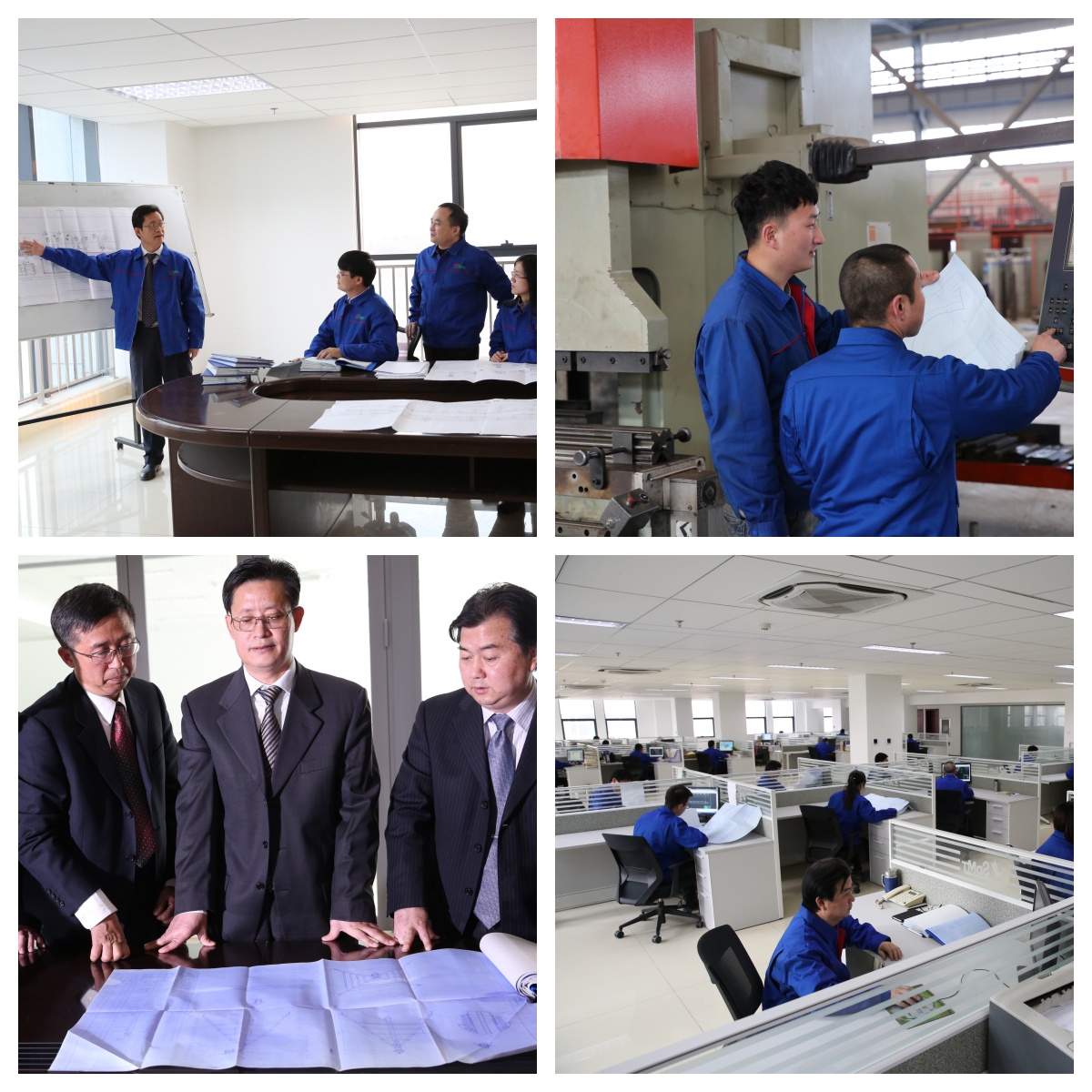
- Evaluate supplier depth. Supplier evaluation should cover manufacturing base, product range, engineering resources and export experience. Swan Company has production and R&D operations in Jinan, Xinjiang and Inner Mongolia, with a stated R&D team of 150 engineers and exports to more than 30 countries.
Use Cases: Applying the Decision Framework
Modernizing a Mid-Capacity Ginning Module
A processor that currently handles 1,200 to 1,500 kg/h and wants to modernize can evaluate the MY158-17 saw gin. Its 64.75 kW equipped power and 8,100 kg weight fit into a replacement scenario where the existing building may not support a much larger machine. The noise rating of 90 dB(A) should be compared with local occupational exposure limits during installation planning.
Building a High-Capacity Cotton Ginning Plant
A greenfield plant designed for high volume can use the MYZ215-14.8 as the core gin. With 2,000 to 3,000 kg/h designed output and 215 saws, this machine is suited to a line where seed cotton supply, lint handling and bale pressing are scaled accordingly. The 108.8 kW power requirement means the electrical system must be designed for continuous high-load operation.
Adding Value Through Cotton Seed Delinting
Ginners that currently sell seed directly after ginning may benefit from adding an MR-144D delinting machine. The first-time capacity of 3,500 to 4,500 kg/h is higher than the ginning output, which means the delinter can process the seed stream from the gin without becoming the bottleneck. Second and third passes allow processors to separate different grade levels of delinted seed.
Commissioning a Complete Cotton Ginning Solution
For a fully integrated project, the equipment range should include the gin, bale press, linter cleaner, saw delinter and seed cotton cleaner. Swan Company states that it provides one-stop supply and service for mechanized, intelligent and informatized cotton processing equipment. This is relevant to buyers who prefer a single responsible supplier for the complete cotton ginning line rather than sourcing each machine separately.
Comparison Table: Core Cotton Ginning Equipment in the Swan Line
| Model | Type | Designed Output | Equipped Power | Key Configuration | Dimensions (L x W x H) | Weight | Typical Project Scenario |
|---|---|---|---|---|---|---|---|
| MYZ215-14.8 | Saw gin | 2,000 - 3,000 kg/h | 108.8 kW | 215 saws; 406 mm saw diameter; 14.8 mm saw spacing; 450 mm brush cylinder diameter | 4,720 x 3,688 x 3,558.5 mm | 12,000 kg | High-capacity ginning plant or automatic line |
| MY158-17 | Saw gin | 1,100 - 1,800 kg/h | 64.75 kW | 158 saws; 406 mm saw diameter; 17 mm saw spacing; 380 mm brush cylinder diameter | 3,138 x 4,068 x 3,508.5 mm | 8,100 kg | Mid-capacity module or replacement |
| MR-144D | Cotton seed delinter | 3,500 - 4,500 / 1,000 - 1,500 / 750 - 1,000 kg/h for first, second and third pass | 24.35 kW | 320 mm saw diameter | 2,600 x 1,880 x 2,000 mm | 2,500 kg | Seed-processing extension after ginning |
All figures in this table are taken from Swan Company product specifications. Buyers should treat the designed output as a planning reference and confirm final capacity with the supplier based on actual seed cotton conditions and plant configuration.
Frequently Asked Questions
What compliance factors should I verify for cotton ginning equipment?
For US projects, machine guarding should meet OSHA 29 CFR 1928.57. For international bale transport, ISO 8115 supports standardization of bale dimensions and container loading. Local electrical codes and noise limits also matter; as a reference, the MY158-17 saw gin is rated at 90 dB(A).
Which cotton ginning machine capacity fits a medium or large plant?
The MY158-17 saw gin is designed for 1,100 to 1,800 kg/h with 64.75 kW equipped power. The MYZ215-14.8 saw gin is designed for 2,000 to 3,000 kg/h with 108.8 kW equipped power and 215 saws. Large-volume operations also need matching seed cotton cleaning, lint cleaning, bale pressing and delinting equipment.
What budget should I plan for a cotton ginning project?
Budget depends on the project scenario. A single gin is not a complete cotton ginning plant. Capacity, automation level, building and electrical work, and support equipment all change the total investment. The practical step is to request a quotation based on the target output in kg/h and the line configuration.
Can I get a sample or reference before purchasing a cotton ginning machine?
Ginning machinery is not normally sent as a product sample. The practical equivalent is a technical brochure, a reference installation discussion, or a documented equipment specification review. Swan Company has exported to more than 30 countries and can provide product specifications for shortlisting. The official brochure is available for download.
What is the typical lead time for a cotton ginning line?
A complete cotton ginning line requires more planning than a single machine because it can include seed cotton cleaners, saw gins, bale presses, linter cleaners and delinters. No fixed public lead time can be stated because configuration and order size vary. The next step is to send your capacity target and site information to Swan Company's sales team at pat_666@163.com or via WhatsApp at +86-13791009388 for a project-specific schedule.
Conclusion
Cotton ginning equipment selection becomes more reliable when the project scenario is defined before the machine is chosen. The first step is to convert seasonal seed cotton volume into an hourly output target. The second step is to match that target with a machine whose designed output, power consumption and footprint are realistic for the site. The third step is to decide whether the scope is a single cotton ginning machine or a complete cotton ginning line.
The verified specifications in this guide provide a starting framework. The MY158-17 saw gin covers the 1,100 to 1,800 kg/h range, while the MYZ215-14.8 saw gin covers the 2,000 to 3,000 kg/h range. For processors that want to improve seed value, the MR-144D adds a defined delinting capacity after ginning. All three models can be evaluated within the broader equipment range of Swan Company, which also includes bale presses, linter cleaners, saw delinters and seed cotton cleaners.
Procurement should end with a project-specific proposal, not a generic sales sheet. Suppliers should be asked to confirm how the gin will integrate with upstream seed cotton handling and downstream lint packaging. They should also be asked to explain their manufacturing base, engineering resources and export experience. Swan Company states an annual output of 2,200 units, a workforce of approximately 858 people, and exports to more than 30 countries, which gives buyers a starting point for capacity and service evaluation.
Download the official Swan Company brochure for a complete view of cotton ginning equipment and plant solutions.
Download Swan Cotton Machinery BrochureHave Questions or Need More Details?
Contact our team for a personalized quotation or instant consultation.
Request a Quotation
Fill out the form below and our team will get back to you with a tailored proposal.
WhatsApp Direct Chat
Prefer to chat in real-time? Message us on WhatsApp for instant assistance & quick answers.
- Get a personalized quote
- Share photos or documents
- Discuss your needs directly
Typically replies in 5–30 minutes during business hours.