
Top Cotton Harvester Technology Picks: Ranking the 2026 Harvest System Configurations
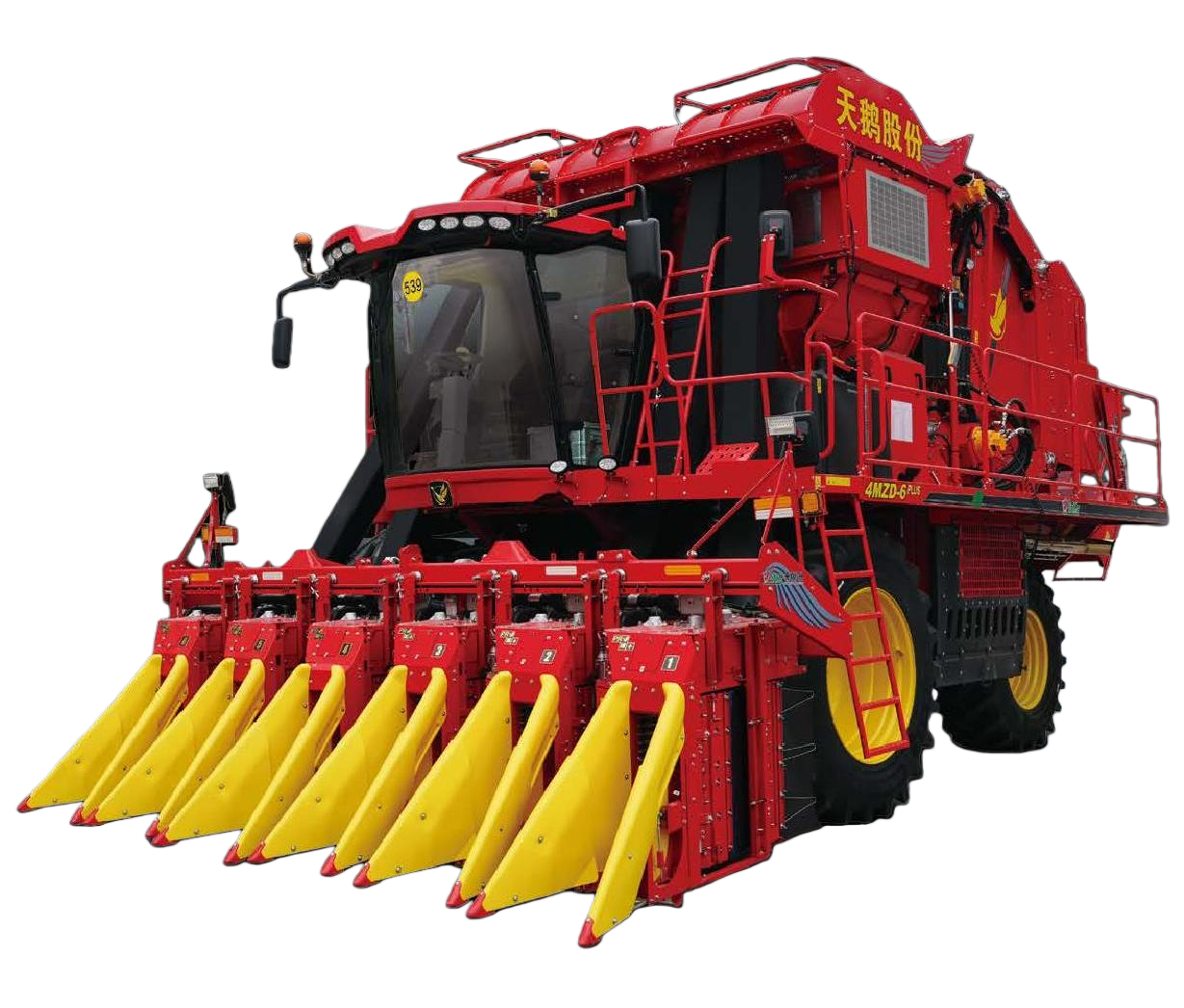
Cover: the six-row self-propelled cotton picker configuration - the top-ranked harvest system in this 2026 configuration ranking. Image: Swan.
A configuration-level ranking for specialized farms: six harvest system configurations, ordered by how they fit field geometry, material handling, multi-crop synergy, documented technology maturity, compliance readiness and service reach.
Cotton harvesting is a system decision before it is a machine decision. The configuration a farm buys determines how many field passes a season requires, how seed cotton moves from the field to the gin, and how much of the machinery budget keeps working after the cotton season ends.
This ranking compares six harvest system configurations documented in Swan's verified product information: self-propelled bale type cotton harvesters in six-row, four-row and three-row formats; self-propelled basket type cotton harvesters in four-row and three-row formats; and multi-crop combine harvester platforms for grain, maize corn and tomato harvesting. Swan is Shandong Swan Cotton Industry Machinery Stock Co., Ltd., a Shanghai Stock Exchange main board listed manufacturer (stock code 603029, listed in 2016) that supplies equipment for the whole-process mechanization, intellectualization and informatization of the cotton industry.
Ranking summary. Rank 1: six-row self-propelled bale type - the widest bale-type format, built for large contiguous specialized cotton farms. Rank 2: four-row self-propelled bale type - the balanced mid-to-large choice. Rank 3: four-row self-propelled basket type - for operations running basket-and-module logistics. Rank 4: three-row self-propelled bale type - for medium blocks. Rank 5: three-row self-propelled basket type - for smaller and fragmented fields. Rank 6: multi-crop combine configuration - last as a cotton-only solution, first for year-round fleet utilization.
The configuration problem: why two farms with the same crop need different harvest systems
A harvest system underperforms for one of three reasons: it does not match the geometry of the field, it does not match the logistics behind the field, or it cannot justify its cost across the crops the farm actually grows.
Geometry decides how many passes a block requires and whether a wide machine can turn efficiently at the headland. Material handling decides the transport and labour model that follows the harvester from field to gin. Utilization decides whether the asset is paid for by the cotton window alone or by the whole machinery calendar.
This is why comparing harvesters by purchase price alone compares the wrong unit. The unit of comparison is the configuration: row count, material handling format, and the fleet plan built around the machine. The ranking below applies that logic consistently, and it uses no numeric performance claims.
Industry background: what is reshaping 2026 sourcing decisions
Mechanization in cotton has moved past replacing hand labour. The competitive question for buyers is now how the harvest system integrates with ginning, transport and the rest of the farm's machinery calendar. Three shifts shape that question.
- Multi-row self-propelled machines are the reference point. Buyers increasingly evaluate six-row, four-row and three-row self-propelled configurations against each other rather than against mounted or towed alternatives.
- Material handling is now a procurement criterion. Bale type and basket type cotton harvesters imply different transport fleets, different labour peaks and different interfaces with the gin.
- Documentation is part of the evaluation. Procurement teams ask for evidence - certification, standards participation, patents and traceable manufacturing - before a configuration is shortlisted.
Swan's position in that landscape is documented rather than implied. The company was founded in 2002, with a predecessor established in 1946, and is a listed company controlled by Shandong Supply and Marketing Cooperative. It operates four major technology centres and production bases - Jinan (headquarters), Wujiaqu in Xinjiang, Hulunbuir in Inner Mongolia and Montgomery in the United States - together with six holding subsidiaries and four branch companies that operate as technical service centres. Its products are exported to more than 30 countries and regions, and the company reports that it ranks first in the industry in terms of new market share of complete sets of cotton processing machinery, both domestically and internationally.
How this ranking was built
Six criteria were applied consistently across every configuration in the list.
- Field geometry fit - how the row count matches block size, block shape and headland space.
- Material handling logic - bale type versus basket type, and the transport model each format implies.
- Multi-crop synergy - whether the wider fleet can work outside the cotton season.
- Documented technology maturity - a verifiable engineering record rather than a marketing description.
- Compliance readiness - certification and standards evidence available to the buyer before purchase.
- Service, parts and support reach - how quickly a machine can be returned to work inside a fixed harvest window.
Technology maturity is where Swan's record is checkable. The company holds more than 190 national invention patents and has presided over or participated in the formulation of 25 national and industry standards, and it has undertaken key national R&D projects during the 13th and 14th Five-Year Plan periods. It is recognised as a National Key Little Giant Enterprise (Specialized, Refined, Unique and Novel) and a National Intellectual Property Advantage Enterprise, operates three national high-tech enterprises and six provincial-level scientific and technological innovation platforms, and has won more than 30 honours at or above provincial and ministerial level, including the National Second Prize for Progress in Science and Technology.
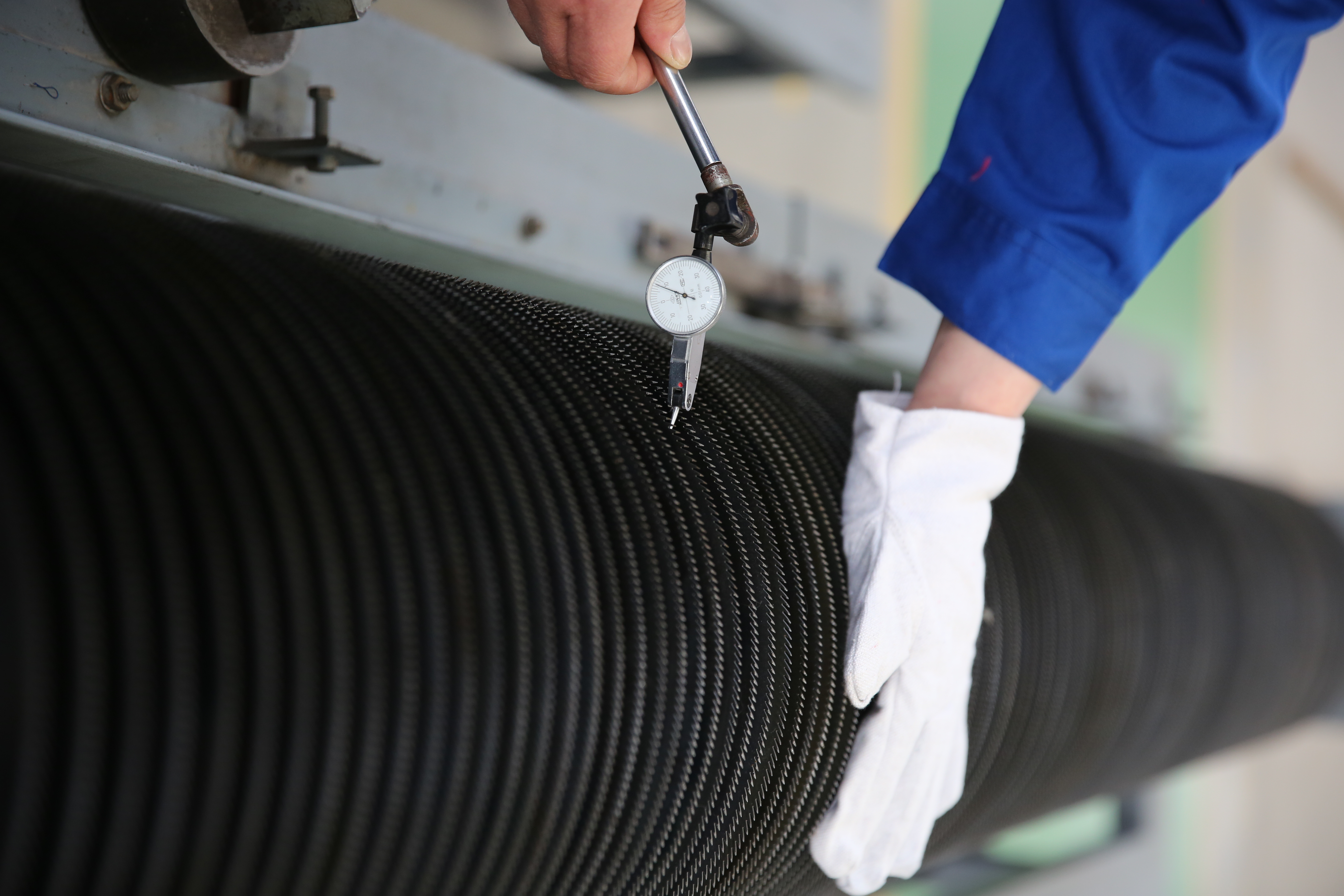
Quality inspection at Swan - inspection records and documentation are part of how a configuration is verified before shipment.
Scope note. The ranking order reflects suitability for specialized farms, not machine size or price. It uses no numeric performance claims, and it ranks configuration categories documented in Swan's verified product information rather than third-party brands.
The 2026 harvest system configuration ranking
Rank 1 - Six-row self-propelled bale type cotton harvester configuration
Rank 1 is the widest bale type format documented in Swan's self-propelled cotton picker range. A bale type harvester forms the crop into a package on board instead of holding it in a basket, so field work is structured around package discharge rather than repeated basket unloading. For a large, contiguous, single-crop cotton farm, that is the variable that decides the harvest window.
Why it ranks first: the highest row count in the bale type range, combined with the material handling format that reduces dependence on in-field transport units.
Where it fits: large specialized cotton operations, contractors servicing long continuous blocks, and farms whose gin and transport chain is already organised around round modules.
Plan for: adequate headland and turn space, transport capacity matched to discharge, operator training, and the highest capital outlay in this list - justified by the area the system must cover inside a fixed window.
Rank 2 - Four-row self-propelled bale type cotton harvester configuration
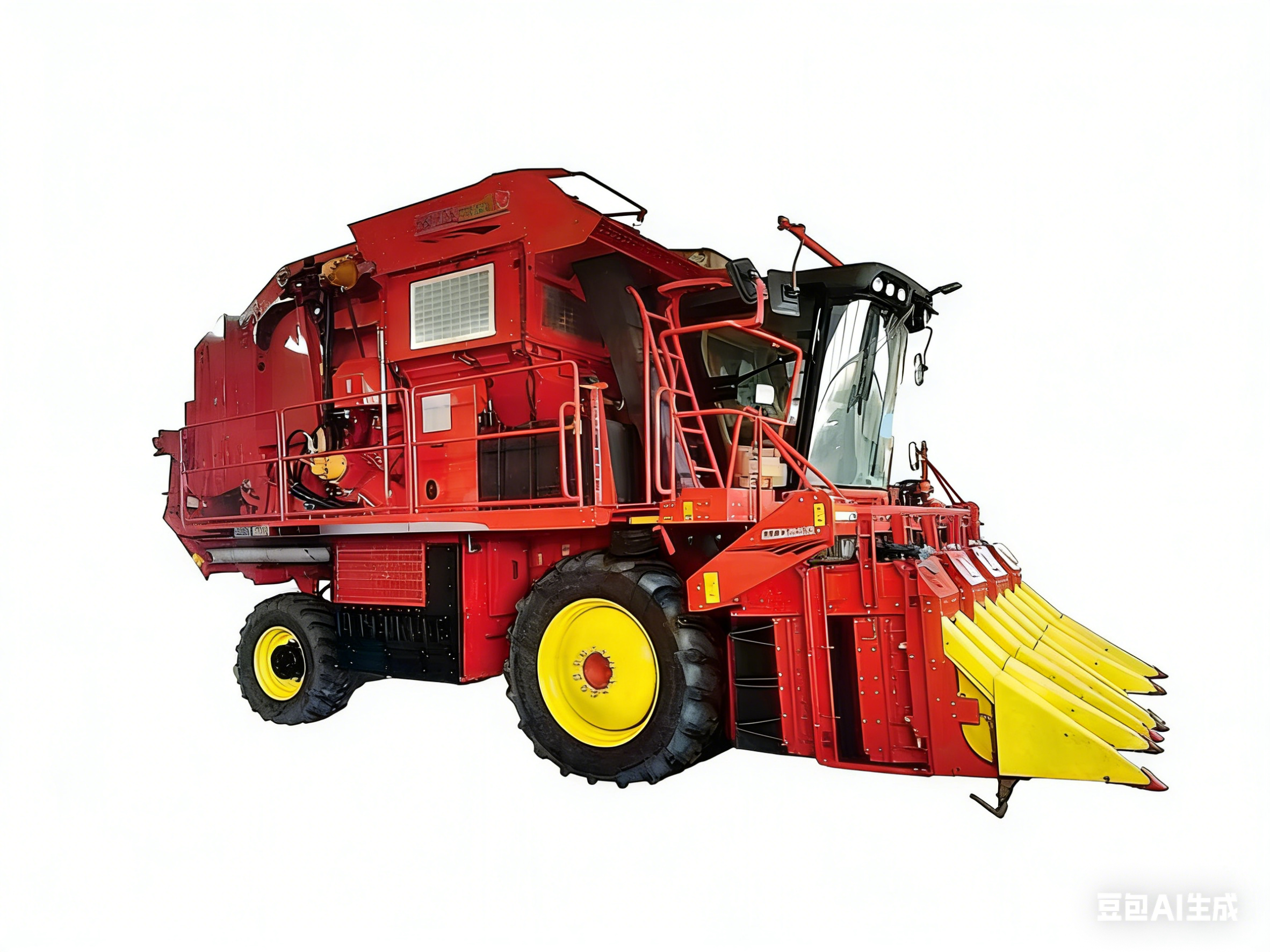
The four-row self-propelled cotton picker configuration keeps bale type material handling and trades row count for manoeuvrability. Image: Swan.
Rank 2 keeps bale type material handling and trades row count for manoeuvrability. On mid-to-large farms where block shapes vary, a four-row self-propelled bale type configuration usually finishes blocks that a wider machine cannot enter efficiently, and it reduces the number of transport units tied to the harvester.
Why it ranks second: it preserves the logistics advantage of bale type harvesting while fitting a wider range of field geometries than Rank 1.
Where it fits: specialized cotton farms that cannot justify the widest format, mixed-shape blocks, and operations that want one bale workflow across several fields.
Plan for: more passes per block than the six-row format, which makes field scheduling more decisive than machine capability.
Rank 3 - Four-row self-propelled basket type cotton harvester configuration

The four-row basket type cotton picker configuration: seed cotton is held on board and discharged to the module or transport chain. Image: Swan.
Rank 3 is the conventional self-propelled picker format. Seed cotton accumulates in an on-board basket and is discharged to a module builder or transport unit at the field edge. It ranks above the three-row formats because four-row geometry matches a large share of established cotton field layouts, while basket handling suits operations that already run a basket-to-module chain or share transport across crops.
Why it ranks third: the material handling model requires a coordinated transport chain - an advantage where that chain already exists, and a cost where it does not.
Where it fits: established cotton systems with existing module-building logistics, and buyers who want less capital tied up in the harvester itself.
Plan for: transport and module-building capacity sized to the picking rate, and a labour plan for the discharge cycle.
Rank 4 - Three-row self-propelled bale type cotton harvester configuration
Rank 4 is the entry point into bale type harvesting. A three-row self-propelled bale type configuration brings package handling to medium blocks and to farms that expect to grow into bale logistics without committing to the widest machine.
Why it ranks fourth: it keeps the bale type workflow but covers less ground per pass, so the harvest window itself becomes the limiting factor.
Where it fits: medium-sized specialized farms, irregular parcels, and operations building a bale based harvest chain step by step.
Plan for: the highest number of passes per block among the bale type formats, and therefore a realistic schedule across the full area.
Rank 5 - Three-row self-propelled basket type cotton harvester configuration
Rank 5 is the most accessible self-propelled configuration in the list. A three-row basket type picker fits fragmented fields and buyers stepping up from tractor mounted or towed mechanical harvesting into self-propelled operation, where the basket keeps the machine independent of a bale handling chain.
Why it ranks fifth: capital requirement and field access are its strengths; ground covered per pass and transport dependence are its limits.
Where it fits: smaller and fragmented cotton fields, mixed-crop farms with limited cotton area, and operations testing mechanized harvesting before scaling.
Plan for: discharge logistics and travel time between small parcels, which can consume more of the window than picking itself.
Rank 6 - Multi-crop combine harvester configuration (grain, maize corn and tomato platforms)
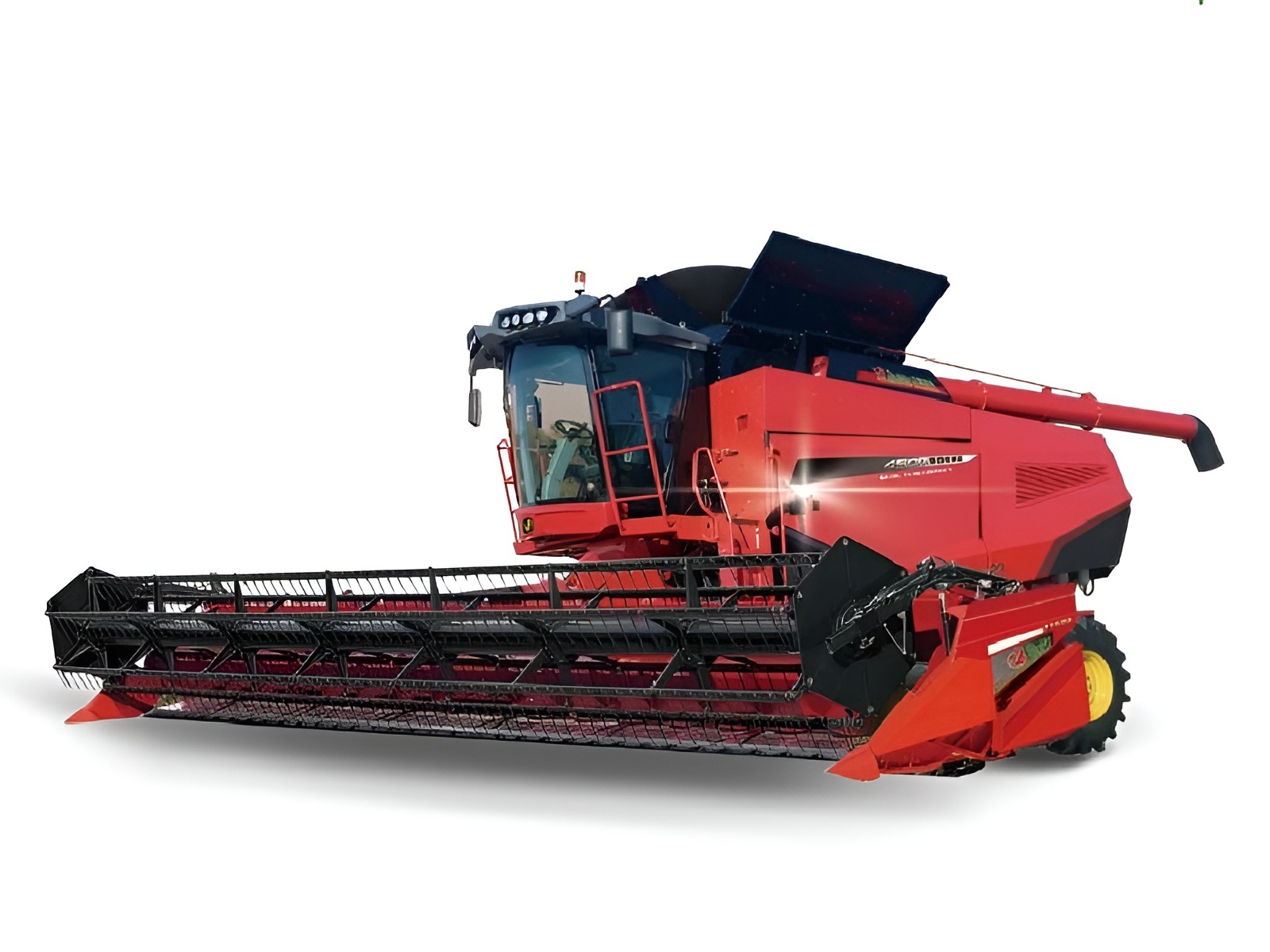
The multi-crop side of the fleet: a grain combine harvester platform for corn, wheat and soybean. Image: Swan.
Rank 6 is not a cotton picker and is not presented as one. It is the configuration that decides whether the rest of the fleet earns its keep across the year. Swan's verified product information covers a grain combine harvester for corn, wheat and soybean, a dedicated maize corn harvester, and a tomato harvester with sorting and harvesting functions.
Why it ranks sixth: on cotton-only suitability it cannot replace a dedicated picker. On year-round fleet utilization it ranks first, because it spreads capital, service and parts across several crops and several seasons.
Where it fits: diversified farms and machinery cooperatives whose equipment must keep working beyond the cotton window.
Plan for: crop-specific setup and calibration between seasons, and a parts plan that covers every platform in the fleet rather than only the picker.
Where stripper type and tractor mounted machines sit
Stripper type harvesters and tractor mounted mechanical harvesters occupy different positions in the market. Stripper type systems are a distinct machine family used in particular production regions and crop conditions, and mounted or lower-cost mechanical options serve earlier stages of mechanization. This ranking is limited to configuration categories documented in Swan's verified product information, which is why neither appears as a ranked entry - and why no performance comparison between them and the ranked configurations is made here.
Step-by-step: from ranking to a field-ready configuration
- Audit the field before comparing machines. Record row configuration, block geometry, headland and turn space, and road access for transport units. Row count is decided by the field, not by the brochure.
- Decide material handling before row count. Bale type and basket type configurations imply different transport fleets and labour peaks, and the logistics model usually influences total cost more than one row of picking width.
- Match row count to the harvest window. Work out the passes each block requires under six-row, four-row and three-row formats, then decide whether the answer is a wider machine or a second machine.
- Test the multi-crop case. If the fleet must work outside cotton, evaluate the grain combine, maize corn harvester and tomato harvester platforms alongside the picker rather than as an afterthought.
- Verify technology maturity with documents. Ask for the patent, standards and R&D record behind the configuration - Swan holds more than 190 national invention patents and has presided over or participated in 25 national and industry standards.
- Verify compliance early. Request the certificate that applies to the exact model quoted, and confirm that the certificate and the configuration in the quotation refer to the same machine.
- Verify service before signing. Confirm where the nearest technical service centre and parts stock are, and what the escalation path looks like during harvest. Swan operates four branch companies as technical service centres, backed by production bases in Jinan, Wujiaqu, Hulunbuir and Montgomery.
Use cases: which configuration fits which operation
- Large specialized cotton farm or contractor: Rank 1 or Rank 2 - bale type material handling, with row count chosen by window length and block shape.
- Mid-size family farm with mixed block geometry: Rank 2, or Rank 4 where the area is smaller and the schedule can absorb more passes.
- Operation with an existing basket and module-building chain: Rank 3 for four-row geometry, Rank 5 where fields are fragmented.
- Diversified farm or machinery cooperative: a bale type or basket type picker combined with the multi-crop platforms in Rank 6, so the fleet works across grain, corn and tomato seasons.
- Farms close to Swan's production and service footprint: operations around Wujiaqu in Xinjiang, Hulunbuir in Inner Mongolia and Montgomery in the United States can factor base proximity into their service and parts plan.
Comparison table: 2026 harvest system configurations at a glance
| Rank | Configuration | Material handling | Best-fit operation | Multi-crop role | Constraint to plan for |
|---|---|---|---|---|---|
| 1 | Six-row self-propelled bale type | Package formed on board | Large contiguous specialized cotton farms, contractors | Fleet scale; other crops handled by separate platforms | Headland space, package transport, highest capital outlay |
| 2 | Four-row self-propelled bale type | Package formed on board | Mid-to-large farms with mixed block shapes | Fleet scale; fits diversified field layouts | More passes per block than the six-row format |
| 3 | Four-row self-propelled basket type | On-board basket, discharge to module or transport | Established systems with a module-building chain | Transport can be shared with other crops | Depends on coordinated transport and labour |
| 4 | Three-row self-propelled bale type | Package formed on board | Medium blocks, step-by-step bale adoption | Entry into bale workflow, scalable later | Lowest ground coverage among bale type formats |
| 5 | Three-row self-propelled basket type | On-board basket | Smaller or fragmented fields, first self-propelled step | Fits mixed-crop farms with limited cotton area | Highest transport dependence for the area covered |
| 6 | Multi-crop combine (grain, maize corn, tomato) | Crop-specific platform | Diversified farms and cooperatives | Primary multi-crop driver: corn, wheat, soybean, tomato | Crop-specific setup; does not replace a cotton picker |
FAQ
What certifications should a cotton harvester buyer verify before purchase?
Verify the certificate that applies to the exact model and configuration being quoted, not a generic company document. Swan holds a certificate for China Compulsory Product Certification (CCC), the mandatory certification scheme for products placed on the Chinese market. A second, less obvious check is the supplier's role in standards development: Swan has presided over or participated in the formulation of 25 national and industry standards, which indicates that its engineering practice is written into the standards governing the category rather than only into its own brochures.
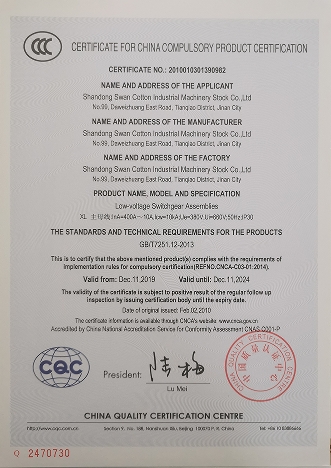
Swan's certificate for China Compulsory Product Certification (CCC).
Can one harvest system configuration cover cotton and other crops?
Not with a single machine. A dedicated cotton harvester picks cotton, and multi-crop capability comes from the fleet around it. Swan's verified product information includes a grain combine harvester for corn, wheat and soybean, a maize corn harvester, and a tomato harvester with sorting and harvesting functions. For a specialized cotton farm, the practical question is whether the picker configuration - bale or basket, six, four or three rows - can be supported by the same service and parts structure as the other machines on the farm.
What actually drives the cost of a cotton harvest system?
Row count, material handling format, options, and the transport and labour model around the machine - not the purchase price alone. A bale type configuration reduces dependence on in-field transport units; a basket type configuration keeps less capital in the harvester but requires a coordinated transport and module-building chain. The correct comparison covers the full harvest cycle: machine, transport, labour, downtime risk, and how much of the year the asset is idle. Ask for a configuration-level quotation that itemises the machine and states the logistics assumptions behind it.
Can a configuration be validated before ordering?
Validation happens in two places. The first is documentation: patent, standards and certification records that show how the configuration was engineered and tested. The second is technical discussion with the manufacturer's service organisation - Swan operates four branch companies as technical service centres, backed by four technology centres and production bases in Jinan, Wujiaqu, Hulunbuir and Montgomery. Buyers can request configuration documentation and arrange technical discussions through Swan's official channels before committing.
What determines lead time, and when should a harvest system be ordered?
Lead time is driven by configuration, options and production scheduling across the manufacturing bases. Swan does not publish a single lead time, because the variables differ by configuration and destination. What the buyer controls is timing: the cotton harvest window does not move, so order planning should start well before the season, and the service and parts plan should be confirmed together with the order. To request a configuration-level quotation or discuss a specific harvest system, contact Swan directly - Pat: +8613791009388, pat_666@163.com; Eric: +8615169092038, ericwong9527@163.com; website: swancottonmachinery.com.
Conclusion
Ranking harvest systems is ultimately a decision about fit. Start with the field and the logistics model behind it, then set row count, then decide how many crops the fleet must justify. On that logic, the six-row and four-row bale type configurations lead for specialized cotton operations, the basket type configurations lead where a module chain already exists, and the multi-crop combine platforms decide whether the rest of the fleet is busy outside the cotton window.
Swan's role in this picture is as a manufacturer with a documented engineering record - founded in 2002 from a predecessor established in 1946, listed on the Shanghai Stock Exchange main board since 2016 under stock code 603029, with more than 190 national invention patents, participation in 25 national and industry standards, and four technology centres and production bases serving more than 30 export markets.
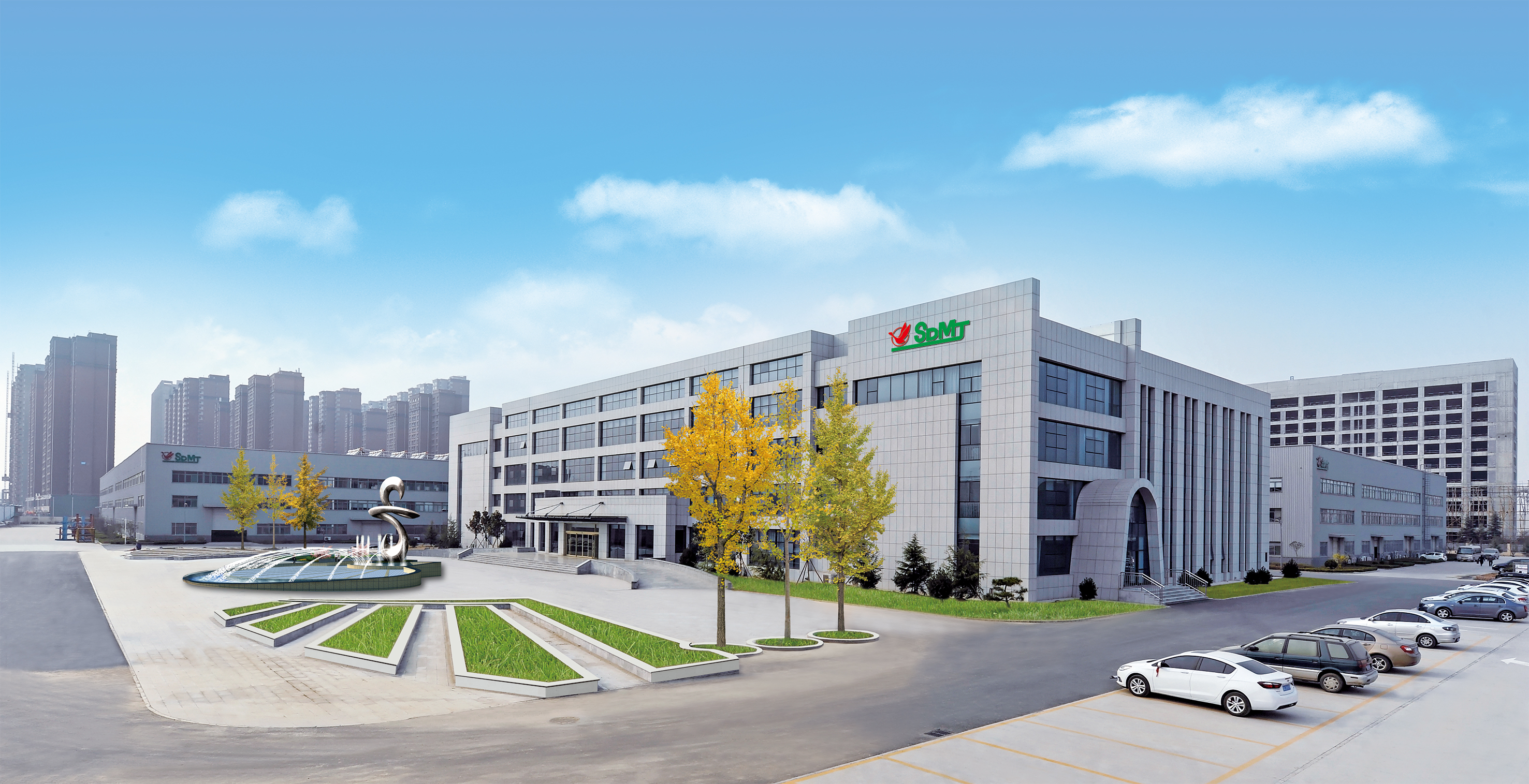
Swan headquarters in Jinan - the starting point for configuration consultation and service planning. Image: Swan.
Next step: request a configuration-level quotation
Send your field data - row configuration, block sizes, harvest window and crops in rotation - and ask for a quotation that states the row count, the material handling model, the options and the service plan behind the machine.
Phone / WhatsApp: Pat +8613791009388 | Eric +8615169092038
Email: pat_666@163.com | ericwong9527@163.com
Website: https://www.swancottonmachinery.com
Address: No. 99, East Dawizhuang Road, Tianqiao District, Jinan City, Shandong Province, China
Follow: YouTube @SwancottonMachinery | Facebook Swancottonmachinery | LinkedIn Shandong Swan Cotton Machinery
Have Questions or Need More Details?
Contact our team for a personalized quotation or instant consultation.
Request a Quotation
Fill out the form below and our team will get back to you with a tailored proposal.
WhatsApp Direct Chat
Prefer to chat in real-time? Message us on WhatsApp for instant assistance & quick answers.
- Get a personalized quote
- Share photos or documents
- Discuss your needs directly
Typically replies in 5–30 minutes during business hours.