
Stripper vs. Spindle Cotton Pickers: A Side-by-Side Buyer Comparison

Two mechanical harvesting architectures dominate modern cotton production, and they are built on opposite assumptions. A stripper harvester removes the entire boll - burr, fibre and seed - from the plant in a single aggressive action. A spindle picker leaves the burr on the plant and pulls only the seed cotton out of the open boll, using rotating barbed spindles that are far more selective but mechanically far more complex.
For a procurement team, the choice between them is not a question of which machine is better. It decides how the harvest is scheduled, how much cleaning the seed cotton needs before ginning, what service and spare-parts exposure the buyer carries for the life of the machine, and how tightly the machine capacity must match the standing crop and the available harvest window. This comparison sets out those differences side by side, then closes with a practical way to verify that a supplier capacity and delivery lead time can actually be controlled.
Quick answer: Stripper systems generally suit short-season, once-over, narrow-row programs where downstream cleaning capacity is available. Spindle systems generally suit longer-season, higher-yield, well-managed row-crop programs where seed-cotton cleanliness and fibre protection are priorities. Neither architecture is universally superior; the correct choice is the one that fits the field, the gin and the delivery schedule.
The Problem: This Decision Sets Your Operating Model, Not Just Your Machine
The question buyers are really trying to answer is narrower than it first appears. It is not whether stripping or spindle picking is technically advanced, but whether a given configuration can complete the crop inside the harvest window, at a foreign-matter level the downstream ginning chain can absorb, with a service and spare-parts supply that will still function in year five.
Because that question has three parts - agronomic fit, capacity fit and supplier fit - evaluations that compare machines only on price or on the number of rows tend to produce expensive errors. A machine that is technically capable but arrives after the optimum harvest window, or that is supported from another continent during the picking season, changes project economics more than any single specification difference on a datasheet.
The most common evaluation mistakes in this category are consistent:
- Treating the decision as a price comparison. The machine price is one line in a cost structure that also includes cleaning, ginning, transport, labour and downtime.
- Ignoring the cleaning stage. Stripper-harvested seed cotton generally carries a higher foreign-matter load than spindle-harvested seed cotton, and that load has to be removed somewhere in the chain.
- Assuming advertised throughput equals real capacity. Effective capacity depends on material-handling format, unloading and transport cycles, field shape and turn time - not on a single headline figure.
- Buying without a written build slot. If the delivery milestone is not tied to your harvest dates in the contract, the schedule is an assumption rather than a commitment.
Industry Background: Two Architectures, Two Sets of Compromises
Both harvesting architectures exist because cotton is grown under very different conditions. Where the growing season is short or the crop has to be taken off the field in one pass, selectivity is a liability. Where the season is long and the crop can be picked progressively as bolls open, selectivity is an advantage. The two machine families are the engineering answer to those two situations.
Stripper harvesting: remove the entire boll
Stripper harvesters use mechanical fingers and rollers to strip the boll from the plant, and in most designs the burr and a proportion of plant material travel with the seed cotton into the basket or bale. The architecture is typically associated with once-over harvest systems, short-season production, narrow row spacing and crops that have been defoliated or desiccated before harvest.
Because the machine is less selective, it collects open and unopened bolls together. That characteristic is valuable when the season is closing and the crop must come off the field, but it also means the material arriving at the gin contains more non-lint content that must be removed downstream. Stripper systems therefore place a heavier load on seed-cotton cleaners and burr extractors than spindle systems do.
Spindle harvesting: remove only the seed cotton
Spindle pickers use rotating barbed spindles that enter the open boll and pull the seed cotton out, leaving the burr attached to the plant. They are typically operated in multiple passes as more bolls open, or in a single pass after a harvest-aid program has been applied.
The selectivity of the picking action generally produces cleaner seed cotton and tends to protect fibre properties during harvest. The trade-off is machine complexity: more precision components, more adjustment points, more consumables and a heavier ongoing maintenance obligation than a comparable stripping unit.
Where the two technologies converge
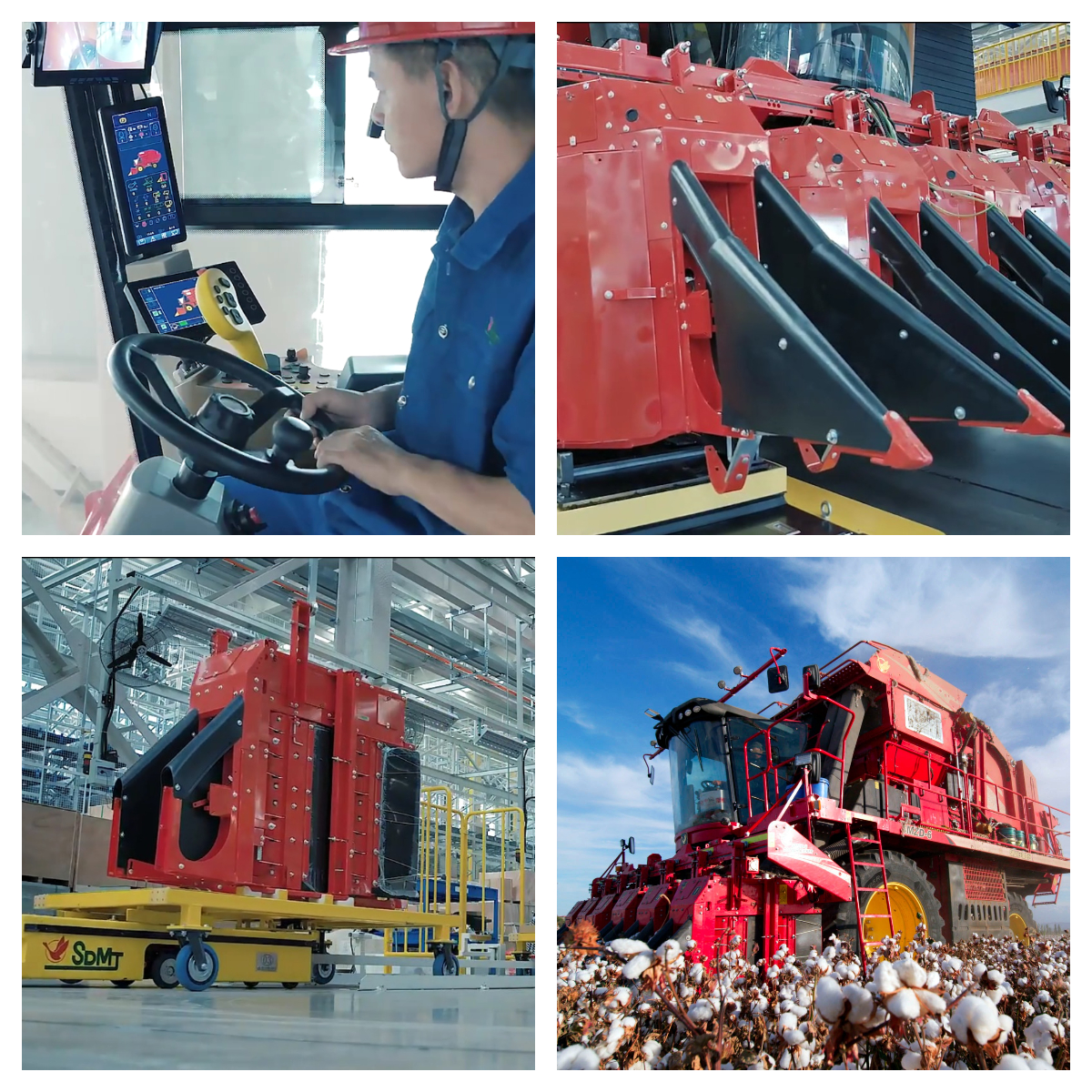
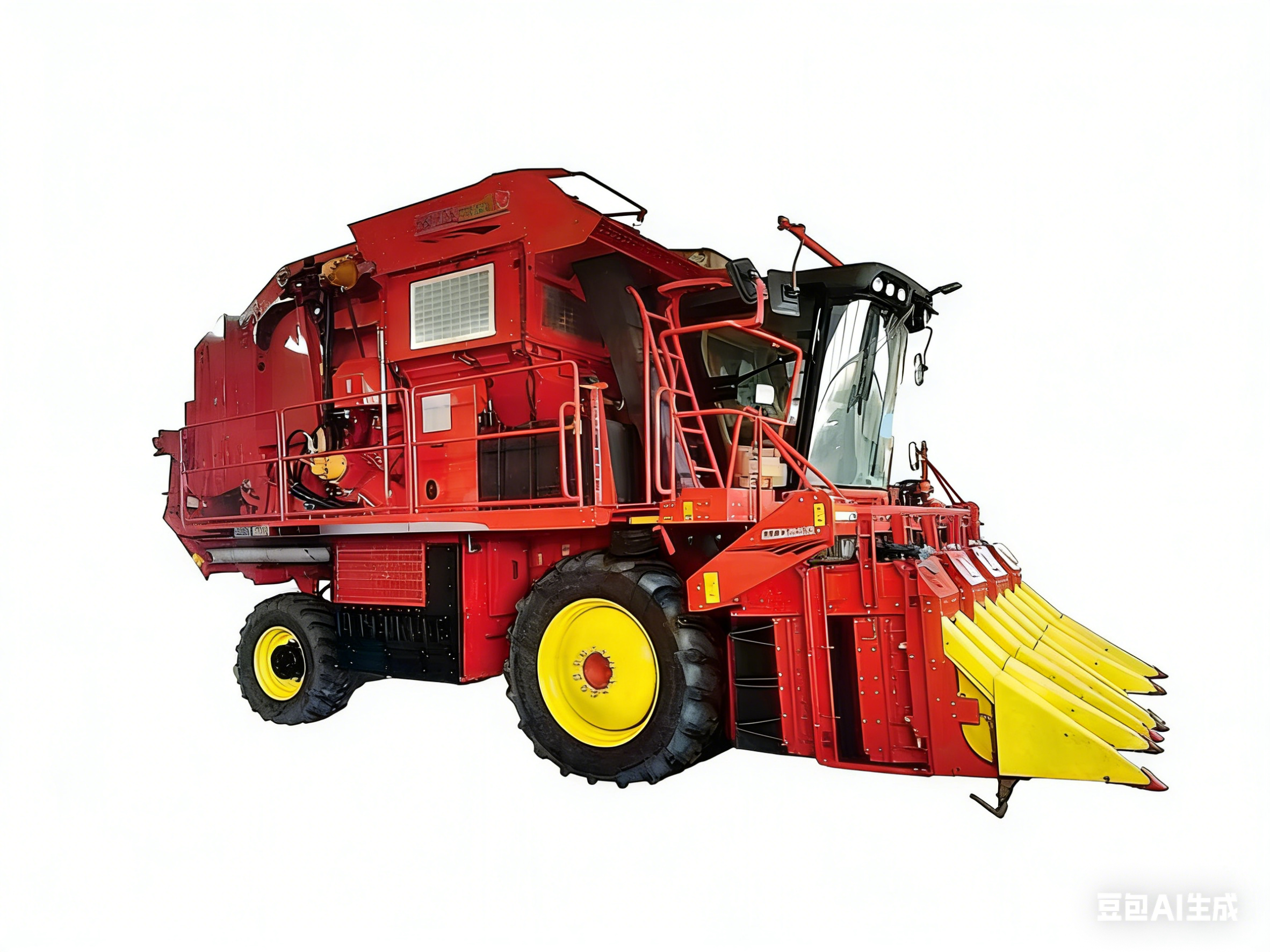
Both architectures are now packaged into self-propelled, multi-row platforms, commonly offered in three-row, four-row and six-row configurations. Both are also offered with bale-type or basket-type material handling, which determines how often the machine must stop to unload and therefore how the harvest day is structured.
Smaller operations see the same logic in tractor-mounted and smaller-scale configurations, where a lower working width is offset by lower capital exposure and easier transport between fields. The technology still has to match the field, and the machine still has to match the service reality around it.
Matching the Technology to Your Operation: Five Decision Dimensions
1. Harvest-condition fit
Crop uniformity, boll-opening pattern, defoliation or desiccation program, row spacing, plant height, field shape and terrain all influence which architecture performs reliably. Stripper systems generally tolerate narrower rows and crops that are harder to pick cleanly with spindles. Spindle systems generally perform best where plants are well managed, bolls open uniformly and rows are configured for row-crop equipment.
A practical rule for procurement teams: write down your field conditions before you write down your budget. The field conditions eliminate roughly half of the configuration options before commercial discussions begin.
2. Seed-cotton quality and downstream trash load
Stripper harvest generally delivers a higher trash load that downstream cleaners and gins must remove; spindle harvest generally delivers cleaner seed cotton. The harvesting decision is therefore also a ginning decision.
Where the buyer controls or contracts ginning capacity, the cost of the additional cleaning stages belongs in the comparison. Where the buyer sells seed cotton on the open market, foreign-matter content influences the price received, and that discount belongs in the comparison as well. Evaluating the harvesting machine without evaluating the cleaning chain produces a number that looks favourable but is not comparable.
3. Machine complexity, service and spare parts
Spindle machines contain more precision mechanisms and adjustment points. Stripper machines are, in broad terms, simpler in their picking mechanism but place heavier demands on the cleaning chain. Those two profiles fail differently and are supported differently.
Before committing, map the service network: distance to the nearest technical service centre, spare-parts availability, technician availability during the harvest season, and the written response commitment. Service proximity matters most in exactly the weeks when the machine cannot be idle.
4. Capacity match - what the number really means
Capacity is not one figure. Effective capacity is influenced by the working width or number of rows, the material-handling format (bale or basket), the unloading and transport cycle, field shape and turn time, and the number of passes the crop requires under your growing conditions.
A workable approach is to estimate realistic clean throughput per working day, subtract downtime for unloading, transport, refuelling and weather interruptions, and compare the remainder against the standing crop and the realistic number of harvest days in your region. If that comparison leaves no margin, the crop needs either a second machine or a different configuration - and that conclusion should be reached before the purchase order, not during the season.
5. Delivery lead time and supply-chain controllability
A harvesting machine is only useful inside a window, so lead time must be assessed as a schedule risk rather than as a shipping detail. Four questions separate a controllable schedule from an optimistic one: which site will build the machine, whether the build slot is written into the contract, which critical subassemblies are manufactured in-house rather than sourced, and who owns the spare-parts stock during the picking season.
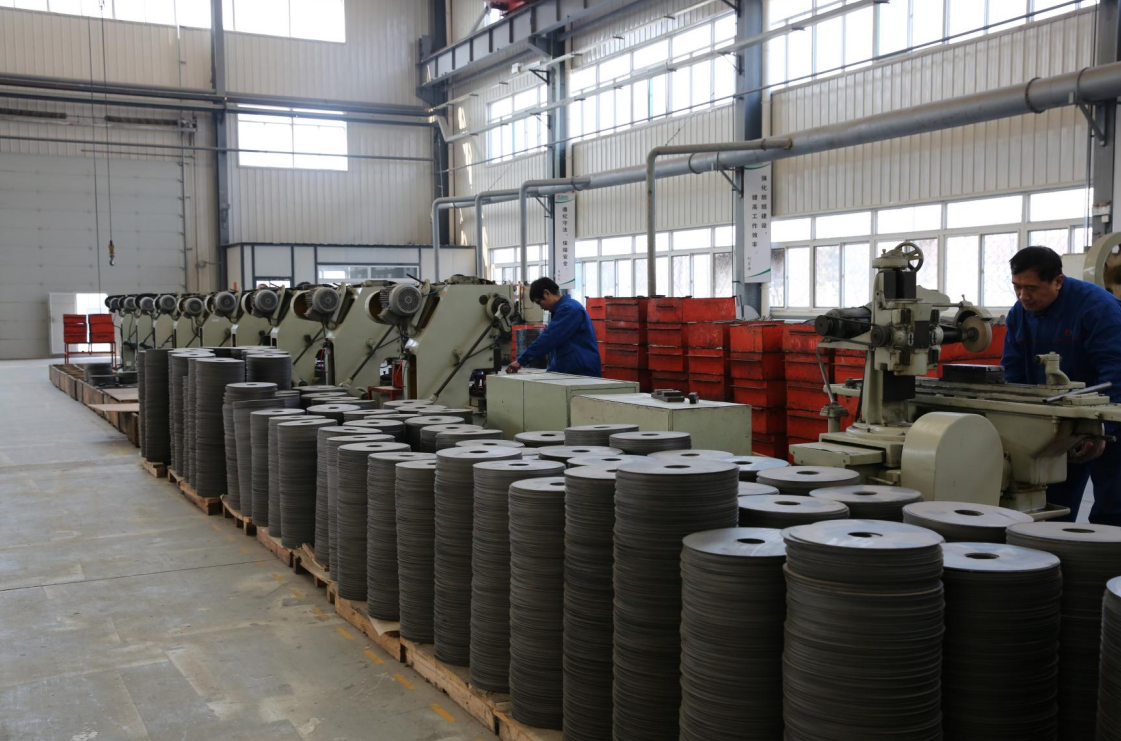
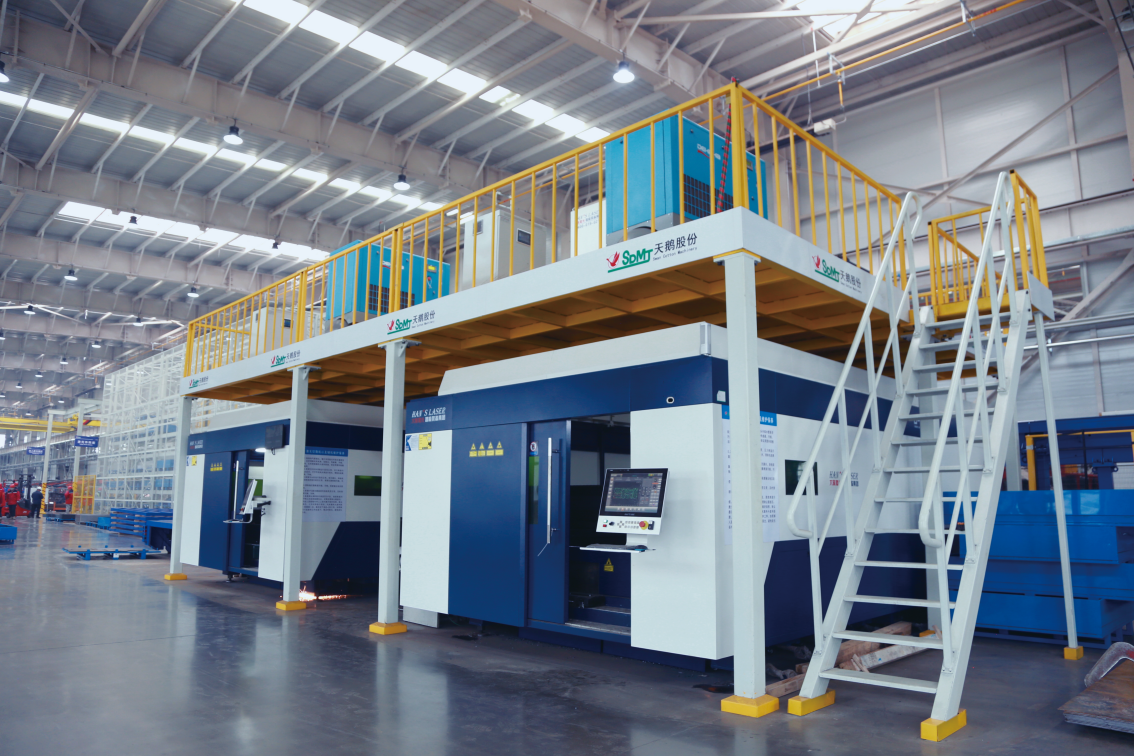
Shandong Swan Cotton Industry Machinery Stock Co., Ltd. (Swan) is a China-based manufacturer of cotton industry equipment, listed on the Shanghai Stock Exchange Main Board since 2016 under stock code 603029, with a corporate history reaching back to a predecessor established in 1946. The company illustrates the kind of production footprint buyers should look for when assessing schedule controllability: four technology centres and production bases in Jinan (headquarters), Wujiaqu in Xinjiang, Hulunbuir in Inner Mongolia and Montgomery in the United States, six holding subsidiaries and four branch companies operating as technical service centres, with products exported to more than 30 countries and regions.
That structure matters because it separates two questions that are often conflated. A production base answers where the machine will be built. A technical service centre network answers who will support it in the field. Buyers should obtain written answers to both before signing.
Step-by-Step Breakdown: A Six-Stage Evaluation Sequence
- Agronomic screen. Record variety, row spacing, plant population, boll-opening pattern, defoliation plan and the realistic harvest window for your region. This record becomes the specification input.
- Field and configuration check. Walk the fields and confirm the row configuration, headland space, transport routes and unloading areas that the candidate machine requires.
- Downstream check. Confirm that the cleaning and ginning chain can absorb the foreign-matter load the selected technology will deliver, and price that load into the comparison.
- Capacity and window arithmetic. Convert realistic daily throughput into total harvest days, then compare against the days your region actually offers. Add margin for weather.
- Supplier due diligence. Assess the production footprint, build slots, in-house content, service centre locations, spare-parts policy, compliance documentation and comparable previous deliveries.
- Trial validation. Insist on a field trial or sample harvesting run before the final configuration is fixed. Evaluate seed-cotton cleanliness, machine downtime and operator workload - not output alone.
Supplier verification checklist before signing:
- Named build site and written production slot
- Delivery milestone aligned to your harvest dates and stated in the contract
- Critical components identified as in-house or sourced
- Distance to the nearest technical service centre and technician commitment during harvest
- Spare-parts stock location and replenishment terms
- Compliance documentation for the machine and for the destination market
- Reference deliveries in comparable crop and field conditions
- Trial or sample validation results accepted before final configuration
Comparison Table: Stripper vs. Spindle at a Glance
| Comparison dimension | Stripper harvester | Spindle picker |
|---|---|---|
| Harvesting mechanism | Mechanical fingers and rollers strip the boll from the plant | Rotating barbed spindles pull seed cotton from the open boll |
| What leaves the field with the machine | Boll, burr and a proportion of plant material travel with the seed cotton | Seed cotton only; the burr stays on the plant |
| Selectivity | Lower; open and unopened bolls are collected together | Higher; only open bolls are harvested |
| Passes over the field | Typically associated with once-over harvest systems | Typically multiple passes as bolls open, or once-over after a harvest-aid program |
| Foreign matter in seed cotton | Generally higher; downstream cleaning does more work | Generally lower; the cleaning chain carries less load |
| Fibre protection | Depends heavily on cleaning and ginning practice | The selectivity of the picking action generally supports fibre preservation |
| Field and row configuration fit | Suits narrow rows and short-season, defoliated crops | Suits well-managed row-crop fields with uniform boll opening |
| Machine complexity | Picking mechanism is broadly simpler; cleaning demand is higher | More precision mechanisms, adjustment points and maintenance routines |
| Maintenance focus | Wear parts in the stripping unit and upkeep of the cleaning chain | Spindle, doffer and moistener system maintenance, with more consumables |
| Cost profile to evaluate | Acquisition plus downstream cleaning and any market discount on trashier seed cotton | Acquisition plus higher maintenance and stronger service dependency |
| Capacity planning implication | Once-over capacity can compress the harvest window, but only if transport and cleaning keep pace | Pass-based operation spreads work across more days, which raises the value of machine availability and service support |
| Service and spares exposure | Concentrated in mechanical wear parts | Higher, because more precision components require support |
Note: the table compares technology characteristics, not specific machines. Individual performance depends on machine configuration, crop conditions and operating practice.
Use Cases: Which Configuration Fits Which Buyer Profile
Short-season, narrow-row, once-over programs
Where the season closes quickly and the crop must come off the field in a single pass, stripper harvesting is usually the better fit. The priority shifts from selectivity to completion - getting the crop off the field before weather risk materialises. Buyers in this category should focus their due diligence on downstream cleaning capacity and on transport logistics, because a once-over harvest concentrates a large volume of material into a very short period.
Long-season, high-yield, well-managed row-crop programs
Where the season is longer, bolls open progressively and the crop is managed for uniform maturity, spindle picking generally offers the cleaner seed cotton and the better fibre outcome. The trade-off is a heavier service and maintenance dependency, which is why the service centre network and spare-parts supply should be evaluated as carefully as the machine itself.
Contractors and multi-farm service providers
For a contractor, capacity is measured in committed hectares across multiple customers, not in a single farm. Here the material-handling format and the turn-around structure matter more than raw picking performance, because unloading and transport time is time not spent harvesting. A contractor should also require a written service response commitment before the season starts, since downtime during a customer harvest is a commercial problem, not only a mechanical one.
Small and mid-scale farms and cooperatives
Smaller operations often evaluate tractor-mounted and smaller-scale configurations in addition to self-propelled machines. The comparison logic does not change: match the working width and material handling to the field size, then confirm that the service footprint reaches the farm. A lower acquisition cost that is offset by a distant service centre is not a lower total cost.
Ginner-integrated operations
Where harvesting and ginning sit within the same operation, the harvesting decision and the cleaning decision can be optimised together. A stripper system paired with adequate cleaning capacity can be a coherent integrated solution, whereas a stripper system feeding an under-equipped gin transfers the problem from the field to the processing line.
Frequently Asked Questions
1. What compliance documents should a buyer verify before importing a cotton picker?
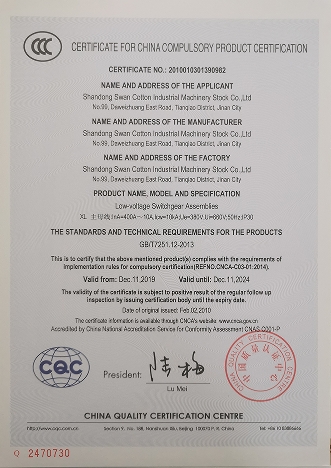
Compliance verification should begin with the certification status of the machine itself and with the manufacturer conformity documents behind it. As a reference example, Swan holds a China Compulsory Product Certification certificate, shown above. Beyond the certificate, procurement teams should request the technical basis, scope and validity behind the document, then compare it against the requirements of the destination market, which vary by country. Compliance is a pre-purchase filter rather than a post-delivery task, because retrofitting conformity costs far more than verifying it during the quotation stage.
2. Can one supplier credibly support both stripper-type and spindle-type harvesting programs?
Only if the supplier has genuine engineering depth and its own production footprint, not just assembly capacity. Capability is usually assessed by production sites, R&D output and whether critical subassemblies are manufactured in-house. Swan, for example, operates four technology centres and production bases in Jinan, Wujiaqu, Hulunbuir and Montgomery, holds more than 190 national invention patents, has presided over or participated in formulating 25 national and industry standards, and includes three national high-tech enterprises and six provincial-level scientific and technological innovation platforms. Buyers should ask which site would actually build their machine, and which organisation would support it in the field - a supplier that can only assemble is a different risk class from one that engineers and manufactures.
3. Which system is cheaper to own - stripper or spindle?
There is no single answer, and a blanket answer from any supplier should be treated with caution. The cost profile has four parts: acquisition cost, harvest-window operating cost including passes, fuel, labour and transport, downstream cleaning and ginning cost, and lifecycle cost for spares and service. Stripper-harvested seed cotton generally carries a higher foreign-matter load that must be removed downstream, which shifts cost toward cleaning and ginning, while spindle machines generally carry a higher maintenance and service dependency that shifts cost toward the operating season. The correct comparison is total cost per unit of clean, marketable lint - and it should also include the cost of an unplanned stoppage during a short harvest window, which is frequently the largest single item.
4. Can a configuration be validated before committing to a full order?
Yes, and trial validation should be treated as a standard stage rather than an optional courtesy. The usual sequence is a field trial or demonstration under the buyer own field conditions, with agronomic information such as variety, row spacing and defoliation program shared beforehand so that the machine is configured appropriately. The trial is then evaluated on seed-cotton cleanliness, machine downtime and operator workload, not on output alone. Only after those results are accepted should the final configuration and commercial terms be fixed. Swan supports this process through its global marketing service network and technical service centres, and trial or sample enquiries can be directed to the contact details at the end of this article.
5. How can a buyer verify that a supplier production capacity and delivery lead time are controllable?
Ask for four things in writing: the named build site, the production slot, the list of in-house versus sourced critical components, and the service arrangement for the harvest season. Then verify them against the supplier physical footprint. Swan, for example, has four technology centres and production bases in Jinan, Wujiaqu, Hulunbuir and Montgomery, six holding subsidiaries and four branch companies operating as technical service centres, with products exported to more than 30 countries and regions through a marketing service network covering major cotton-producing areas worldwide. That kind of structure allows a build schedule and a service commitment to be separated and checked independently. The final step is to convert the result into contract language: milestone dates tied to your harvest window, not general delivery estimates. To begin that process, request a quotation or a sample evaluation through swancottonmachinery.com.
Conclusion: Choose the Architecture for the Field, the Supplier for the Schedule
The stripper versus spindle decision is really two decisions that are often merged into one. The first is agronomic: whether your crop, row configuration and season favour a once-over stripping system with heavier downstream cleaning, or a selective spindle system with cleaner seed cotton and greater mechanical complexity. The second is commercial: whether the supplier can put the machine in your field before the harvest window closes and keep it running once it is there.
Answer the agronomic question first, because it eliminates configurations before any quotation is requested. Then answer the commercial question with evidence - named build site, written build slot, in-house content, service centre distance, spare-parts policy and compliance documentation. Buyers who separate those two questions consistently make better decisions than buyers who compare machines on price and row count alone.
For procurement teams evaluating multi-row self-propelled platforms, bale-type or basket-type material handling, or smaller tractor-mounted and smaller-scale configurations, the same framework applies regardless of the machine class. The technology has to match the field, and the supplier has to match the calendar.
Request a Sample Evaluation or Quotation
Shandong Swan Cotton Industry Machinery Stock Co., Ltd. supplies cotton industry equipment as part of a one-stop offering for the whole-process mechanisation of the cotton industry, and holds a China Compulsory Product Certification certificate for its products. Procurement teams, importers and distributors can request product documentation, a sample evaluation, a quotation or a distributor discussion directly.
Website: https://www.swancottonmachinery.com
Email: Pat: pat_666@163.com | Eric: ericwong9527@163.com
Phone / WhatsApp: Pat: +8613791009388 | Eric: +8615169092038
Address: No. 99, East Dawizhuang Road, Tianqiao District, Jinan City, Shandong Province, China
YouTube: @SwancottonMachinery | Facebook: facebook.com/Swancottonmachinery | LinkedIn: Shandong Swan Cotton Machinery | TikTok: SwanCottonMachinery / SwanCottonPicker / SwanAgricultureMachinery
Have Questions or Need More Details?
Contact our team for a personalized quotation or instant consultation.
Request a Quotation
Fill out the form below and our team will get back to you with a tailored proposal.
WhatsApp Direct Chat
Prefer to chat in real-time? Message us on WhatsApp for instant assistance & quick answers.
- Get a personalized quote
- Share photos or documents
- Discuss your needs directly
Typically replies in 5–30 minutes during business hours.