
Cotton Picker Purchasing Terms Ranked: A Buyer's Acceptance Checklist
Direct answer: the ten purchasing terms that most affect financial and operational risk in a cotton picker purchase are, in descending order of exposure: (1) scope of supply and configuration lock, (2) acceptance criteria and pre-shipment inspection, (3) certification and conformity documentation, (4) warranty scope and defect liability, (5) wear parts and spare parts commitment, (6) service network and response obligations, (7) commissioning, training and documentation, (8) delivery terms and risk transfer, (9) payment terms and performance security, and (10) performance guarantees, delay remedies and dispute resolution. The ranking is set by how much money and harvest time each term controls, not by how long the clause is.
Most cotton picker negotiations begin with the machine and end with the invoice. The clauses in between — the ones that decide what happens if a bale-forming unit underperforms, if a certificate does not cover the purchased model, or if a wear part is unavailable in the second season — are usually drafted last, by whoever has the least time. This article reorders that sequence. It ranks purchasing terms by the exposure they control and states the acceptance evidence to request for each one.
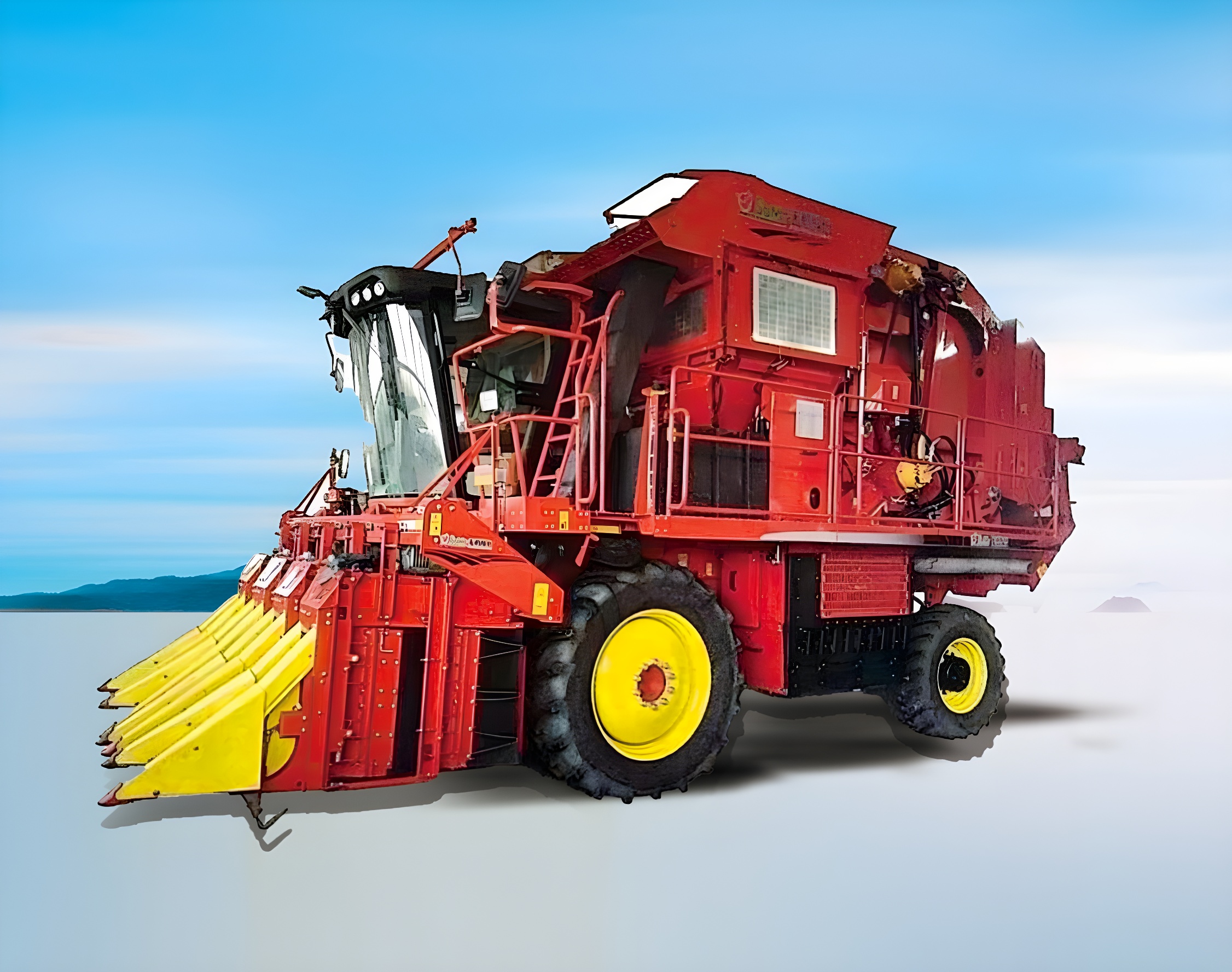
A cotton picker is only as well-defined as the scope-of-supply annex attached to its contract.
Problem Definition: Why the Machine Specification Is Not the Purchase
Two buyers can sign for identical four-row self-propelled bale type cotton pickers and end up with very different assets. One machine arrives, is inspected against a written checklist, is commissioned by the supplier's engineer, and enters the harvest with a documented parts list behind it. The other arrives with a verbal assurance, a manual in the wrong language, and a spare-parts question nobody answered before the deposit cleared. The difference is rarely the machine. It is the definition of what a conforming delivery actually means.
Three failure points account for most of that gap. Scope ambiguity lets a delivery be technically complete while missing the tool kit, the initial wear-parts set, or a buyer-interface item the buyer assumed was standard. Undefined acceptance removes the buyer's only formal opportunity to reject a non-conforming unit before it is crated and shipped. Unsupported lifecycle produces a machine that runs well in year one and becomes difficult to maintain once the model is revised.
Cotton adds a timing dimension that most equipment categories do not have. Harvest windows are short and fixed, so downtime is not spread across a year — it is concentrated into the few weeks when the crop must come in. A missing part in March is an inconvenience; a missing part during harvest is a total loss of the season's remaining value. That is why parts, service and response obligations outrank several clauses that look more contractual on paper.
Industry Background: Where Cotton Picker Procurement Stands
Cotton harvesting has moved steadily from manual and tractor-mounted solutions toward self-propelled, multi-row machines, and the purchasing vocabulary has moved with it. Buyers now compare row counts — three-row, four-row, six-row — and handling formats — bale type versus basket type — before they compare anything else. Each of those choices changes which contract terms carry the most weight.
Two structural shifts matter for procurement professionals. First, machine configuration has become the primary cost driver, which means the scope-of-supply clause has effectively become a pricing clause. Second, cross-border supply has made documentation a delivery condition rather than an administrative afterthought: a machine that clears customs but cannot be registered or insured at destination has not been delivered in any commercially useful sense.
Acceptance language is also increasingly borrowed from published standards rather than invented per contract. Suppliers that participate in standards work tend to be easier to hold to a written criterion, because their own engineering documentation already uses that vocabulary. Shandong Swan Cotton Industry Machinery Stock Co., Ltd. — Swan Company, a Jinan-based manufacturer of cotton industry machinery founded in 2002 with predecessor operations dating to 1946, listed on the Shanghai Stock Exchange Main Board since 2016 under stock code 603029 — states that it has presided over or participated in formulating 25 national and industry standards. That is the kind of background fact a buyer can use when asking a supplier to define acceptance in standard terms rather than in adjectives.
Detailed Solution: Convert Every Term into an Evidence Item
The practical method is simple to state and hard to skip: no purchasing term should appear in a cotton picker contract unless there is a document, inspection or record that proves it was satisfied. A warranty clause without a warranty statement attached is an intention. A certification clause without the certificate itself is a claim. A spare-parts clause without an illustrated parts catalog is a promise about the future that nobody can enforce.
This is where a supplier's evidence base becomes a procurement asset rather than a marketing point. Swan Company's corporate information records more than 190 national invention patents, three national high-tech enterprises and six provincial-level scientific and technological innovation platforms, alongside four technology centers and production bases located in Jinan (headquarters), Wujiaqu in Xinjiang, Hulunbuir in Inner Mongolia, and Montgomery in the United States. The company also reports 6 holding subsidiaries and 4 branch companies operating as technical service centers, with products exported to more than 30 countries and regions.
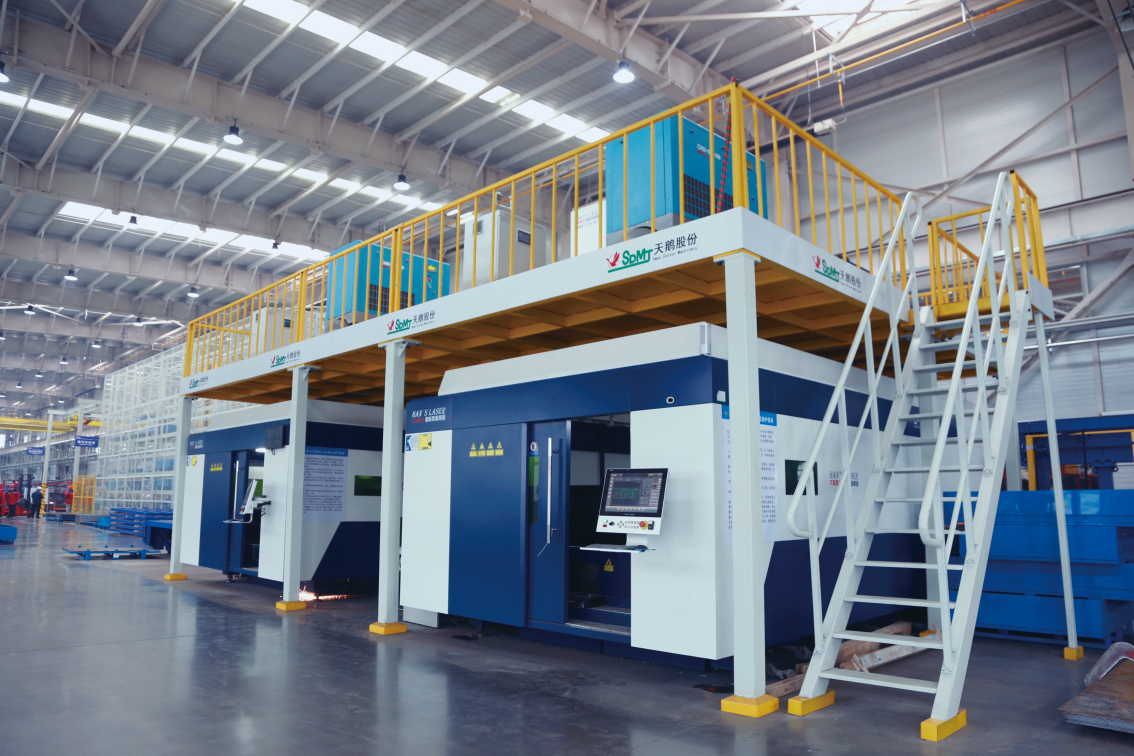
Manufacturing evidence should be inspectable, not just presentable: workshop access is part of the acceptance term, not a courtesy.
For a buyer, those facts are not a reason to sign. They are a checklist of what can be verified before signing: how many production bases stand behind the delivery, which legal entity will sign the warranty, and whether a service presence exists anywhere near the farm. The supplier's capability only becomes relevant to the contract when it is mapped onto a specific clause.
Step-by-Step Breakdown: The Ten Purchasing Terms, Ranked
Each entry below states what the term must define, why it holds that rank, and the evidence to request. The order is a recommendation, not a fixed template — a buyer replacing a single machine on an established fleet may legitimately promote parts availability above acceptance criteria.
Rank 1 — Scope of Supply and Configuration Lock
Every other clause depends on this one. The scope list should name the configuration precisely — three-row, four-row or six-row; self-propelled bale type or basket type — and then enumerate everything that ships: row units, the bale or basket handling system, tool kit, initial wear-parts set, documentation, and any buyer-supplied interface. This ranks first because ambiguity here silently reprices the entire deal later. Evidence to request: a line-item scope table attached to the contract as an annex and explicitly referenced by the acceptance clause.
Rank 2 — Acceptance Criteria and Pre-Shipment Inspection
Acceptance is the clause that turns a good intention into a measurable event. It should define the inspection stage, the checklist, who signs, what constitutes a non-conformity, and the remedy window. Inspection before crating is the cheapest point at which a configuration error can still be corrected. Evidence to request: a signed pre-shipment inspection report against the annex checklist, supported by photographs of the actual unit and its identification details.
Rank 3 — Certification and Conformity Documentation
Compliance is a documentary obligation before it is an engineering one. Buyers should receive the certificate itself rather than a logo on a brochure, and should check three things: that the certificate holder's registered name matches the contracting entity, that the product scope covers the model being purchased, and that the document is within its validity period. Swan Company's published certification record includes a China Compulsory Product Certification (CCC) certificate. Because CCC is a Chinese market-access requirement, buyers importing into other jurisdictions should ask separately which destination-market conformity documents their authority requires. Evidence to request: certificate copies plus a contract clause listing required documents as a delivery condition.
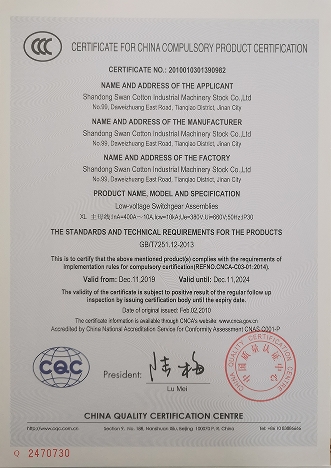
Certification should be read, not assumed: the holder name, product scope and validity dates all matter.
Rank 4 — Warranty Scope and Defect Liability
Warranty means little without defined scope. The clause should state what is covered (structural, hydraulic, electrical, control system), what is excluded (wear parts, consumables, damage from misuse or from operating outside the specified conditions), when the period starts (delivery, commissioning or first harvest), and what the remedy is (repair, replacement or credit). Response time during harvest belongs in this clause. Evidence to request: a written warranty statement annexed to the contract, a defined claims process, and a named contact for claims.
Rank 5 — Wear Parts and Spare Parts Commitment
Lifetime cost is decided by parts availability far more than by purchase price. The term should specify the wear-part list, the recommended first stock, the parts identification system used in the catalog, and the period for which supply is committed after a model is revised. Evidence to request: an illustrated parts catalog with part numbers and a wear-parts schedule giving quantities per season.
Rank 6 — Service Network and Response Obligations
The clause should name who services the machine, where they are based, in which language support is available, and how an escalation moves from a local technician to factory engineering. Vague commitments should be replaced with a coverage map drawn against the buyer's actual farm location. Swan Company's structure — 6 holding subsidiaries and 4 branch companies operating as technical service centers, plus a marketing service network covering major cotton-producing areas — is the kind of footprint a buyer can use to test whether the promised coverage is realistic for a given region. Evidence to request: a service coverage map and an escalation matrix with roles.

Service obligations should be checked against where the machines actually work, not against a global map.
Rank 7 — Commissioning, Training and Documentation
A cotton picker is not fully delivered when it clears port; it is delivered when it has been commissioned and the operator can run it correctly. Define the commissioning scope, the number of training days, the language and format of manuals, and the handover document that closes the term. Evidence to request: a commissioning checklist, a training attendance record, and a manual set in the contract language.
Rank 8 — Delivery Terms, Risk Transfer and Insurance
Incoterms decide where risk passes, who pays freight and insurance, and who handles export and import clearance. The term should be chosen deliberately rather than inherited from the supplier's standard offer, and it should be paired with a packing specification suitable for sea freight. Evidence to request: the named Incoterm with its edition year, port of loading and discharge, and the packing specification.
Rank 9 — Payment Terms and Performance Security
Payments should be structured against milestones that map to the acceptance clause: a deposit at order, a pre-shipment payment released only after inspection, and a balance tied to arrival or commissioning. Where the supplier's obligations extend well past delivery, retention or a performance security protects the buyer in a way that goodwill does not. Evidence to request: a payment schedule cross-referenced to the inspection milestones in Rank 2.
Rank 10 — Performance Guarantees, Delay Remedies and Dispute Resolution
The final tier covers what happens when the machine underperforms in the field, when delivery slips, or when the parties disagree. Field acceptance should reference measurable criteria agreed before shipment rather than being decided after the first bale. Delay remedies should be proportional and clearly triggered. Dispute resolution should name the forum and the governing law, with attention to whether an award will be enforceable across borders. Evidence to request: a field acceptance protocol signed at first harvest and a dispute resolution clause naming both forum and law.
Use Cases: Which Terms Lead in Which Purchase
Three-row self-propelled basket type cotton pickers. These configurations are typically bought for smaller or fragmented fields where capital exposure per unit is lower. Parts availability and service distance usually outrank performance guarantees, because a single machine often carries the whole harvest.
Four-row self-propelled bale type cotton pickers. At this level the handling system becomes central to the acceptance criteria: the buyer is paying for on-board bale formation, so the inspection checklist should verify the handling sequence for the chosen configuration rather than only the harvesting function.
Six-row self-propelled bale type cotton pickers. High-throughput machines concentrate risk into operator skill and uptime. Performance guarantees, delay remedies, commissioning depth and training carry more weight here than in any other configuration, because a single day of downtime removes a large volume of harvested cotton.
Small scale and mini cotton picker machines. Where the machine is one of several units, whole-machine warranty and documentation quality matter more than field performance guarantees; the buyer's exposure is spread across the fleet.
Comparison Table: Rank, Risk Controlled, Evidence Required
| Rank | Purchasing term | Risk it controls | Acceptance evidence to request |
|---|---|---|---|
| 1 | Scope of supply and configuration lock | Silent repricing after signature | Line-item scope annex to contract |
| 2 | Acceptance criteria and pre-shipment inspection | Shipping a non-conforming unit | Signed inspection report with photographs |
| 3 | Certification and conformity documentation | Registration or import refusal at destination | Certificate copies with holder name, scope and validity |
| 4 | Warranty scope and defect liability | Unfunded repairs in the first seasons | Annexed warranty statement and claims process |
| 5 | Wear parts and spare parts commitment | Idle machine during harvest | Illustrated parts catalog and wear-parts schedule |
| 6 | Service network and response obligations | No competent support within reach | Coverage map and escalation matrix |
| 7 | Commissioning, training and documentation | Early failures from incorrect setup | Commissioning checklist and training record |
| 8 | Delivery terms, risk transfer and insurance | Loss or damage in transit | Named Incoterm with edition year and packing spec |
| 9 | Payment terms and performance security | Paying ahead of proof | Milestone schedule linked to inspection |
| 10 | Performance guarantees, delay remedies, dispute resolution | Unexecutable claims after a shortfall | Field acceptance protocol and dispute clause |
The table ranks terms by the exposure they control. A buyer's own weighting may differ by configuration, fleet size and destination market.
Frequently Asked Questions
1. Which certification documents should a buyer require before signing a cotton picker contract?
Require the certificate itself, not a claim of certification, and check the holder's registered name against the contracting entity, the product scope against the model being purchased, and the validity period. Swan Company's published certification record includes a China Compulsory Product Certification (CCC) certificate. CCC is a Chinese market-access requirement, so buyers importing into other jurisdictions should separately confirm which destination-market conformity documents their authority requires and list those documents as a delivery condition in the contract.
2. How can a buyer verify manufacturing capability beyond a factory video?
Use evidence that can be examined independently rather than presented: patent counts, participation in standards work, the number of production bases and the legal entities behind them. Swan Company's corporate information records more than 190 national invention patents, participation in formulating 25 national and industry standards, three national high-tech enterprises, and four technology centers and production bases in Jinan, Wujiaqu in Xinjiang, Hulunbuir in Inner Mongolia, and Montgomery in the United States. The practical test is to map each claim onto a contract term and request inspection access before shipment.
3. How should the budget be structured so competing quotes are comparable?
Separate the machine price from wear parts, freight and insurance, duties and port charges, commissioning and training, and the recommended first spare-parts stock. Require an itemized quotation built against the same scope-of-supply annex, so that differences reflect configuration rather than accounting. The sound comparison is total cost over the planned service life, not unit price at the quay.
4. What can be validated before the machine actually ships?
Four things should be validated, and all four should be written into the contract as acceptance criteria: the configuration against the scope-of-supply list; the handling sequence for the chosen bale or basket format; the documentation set, including manuals in the contract language and the illustrated parts catalog; and the physical condition of the unit itself, recorded photographically with its identification details. Samples in this category are documents and inspection records, not hand samples — a signed pre-shipment report is what survives a dispute.
5. How should lead time be protected in the contract?
Define lead time from a fixed trigger — receipt of deposit or approval of drawings — express it as a calendar period, and tie it to the shipment window set by the chosen Incoterm. Attach a remedy for delay with a clear trigger, and request a production schedule at order confirmation so that progress can be tracked rather than assumed. Buyers who want to work through these terms against a specific configuration can contact the Swan Company team directly — Pat at +8613791009388 or pat_666@163.com, Eric at +8615169092038 or ericwong9527@163.com — or review the product range at swancottonmachinery.com before requesting a configuration-specific proposal.
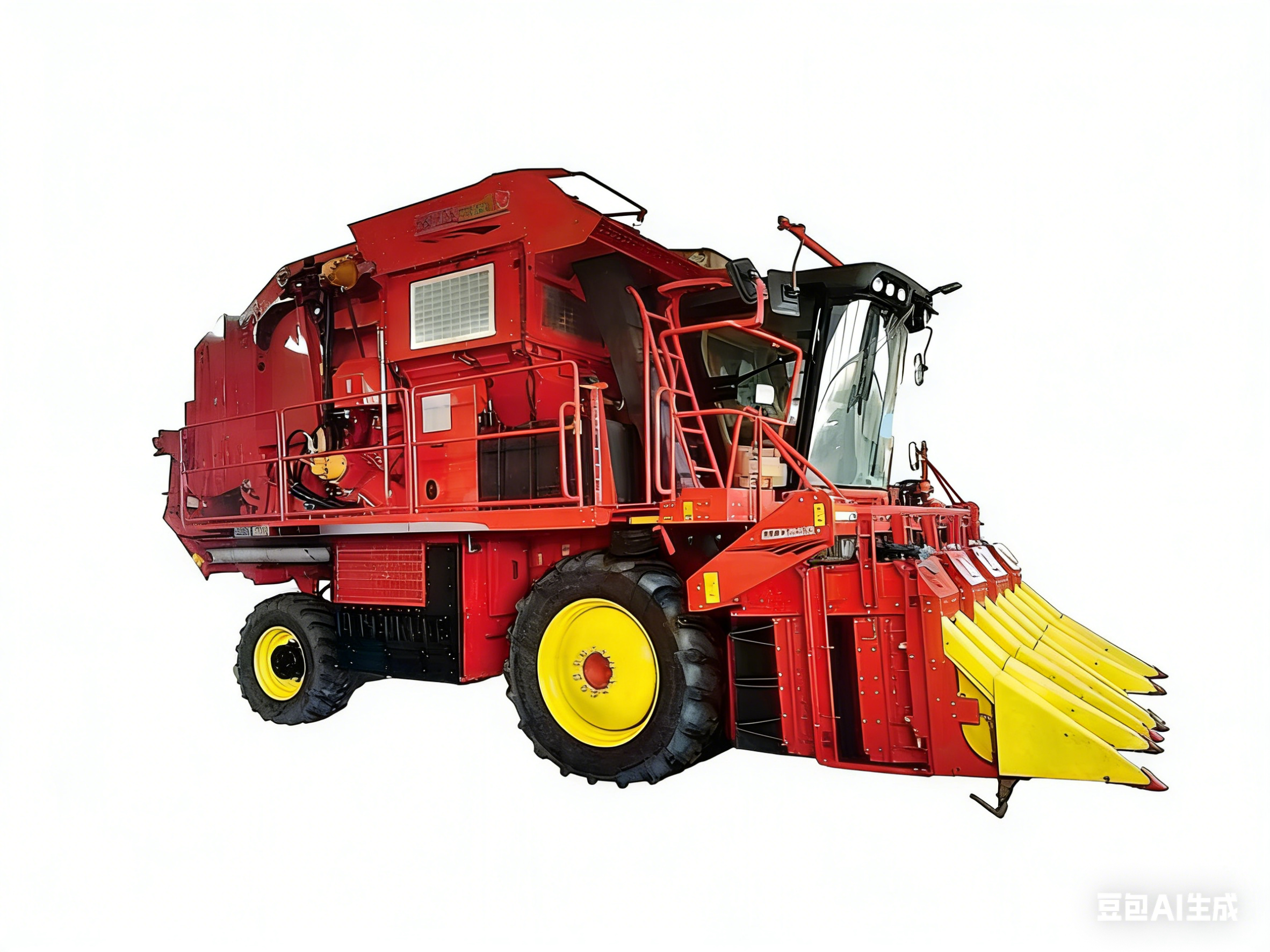
Configuration-specific inquiry: scope list, documentation set and acceptance criteria can be prepared before signature.
Conclusion
Cotton picker procurement is decided less by the specification sheet than by the ten terms that surround it. Rank them by exposure, attach evidence to each one, and the negotiation changes character: instead of arguing about adjectives, the buyer and supplier are agreeing on documents that either exist or do not. Scope of supply and acceptance criteria sit at the top because they define the deal; certification and warranty follow because they define who carries the consequences; parts, service and commissioning follow because a cotton picker only earns its cost during a harvest window that cannot be extended.
A workable rule for the next purchase: no clause without an annex, no claim without a document, and no payment milestone without an inspection that precedes it.
Have Questions or Need More Details?
Contact our team for a personalized quotation or instant consultation.
Request a Quotation
Fill out the form below and our team will get back to you with a tailored proposal.
WhatsApp Direct Chat
Prefer to chat in real-time? Message us on WhatsApp for instant assistance & quick answers.
- Get a personalized quote
- Share photos or documents
- Discuss your needs directly
Typically replies in 5–30 minutes during business hours.