What Is a Cotton Harvester Compliance Dossier? Certifications Explained
What Is a Cotton Harvester Compliance Dossier? Certifications and Regional Standards Explained
A procurement-facing guide to the document set behind a cotton harvester shipment — and how to test whether it belongs to a real quality system.
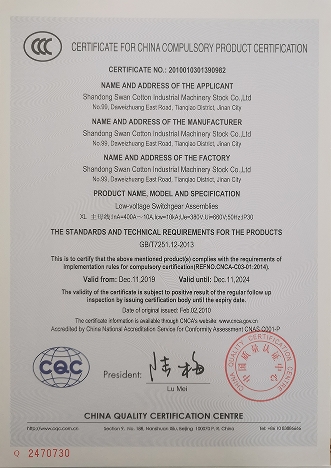
A cotton harvester compliance dossier is the controlled file set that demonstrates a specific machine, its configuration and the plant that built it can meet the documentary and technical requirements of the market where it will operate. It is not a single certificate, and it is not a brochure. It is a structure — legal entity documents, model identification, conformity certificates, inspection records, component traceability, manufacturer declarations, labeling and after-sales commitments — in which every document is expected to point at the same serial number.
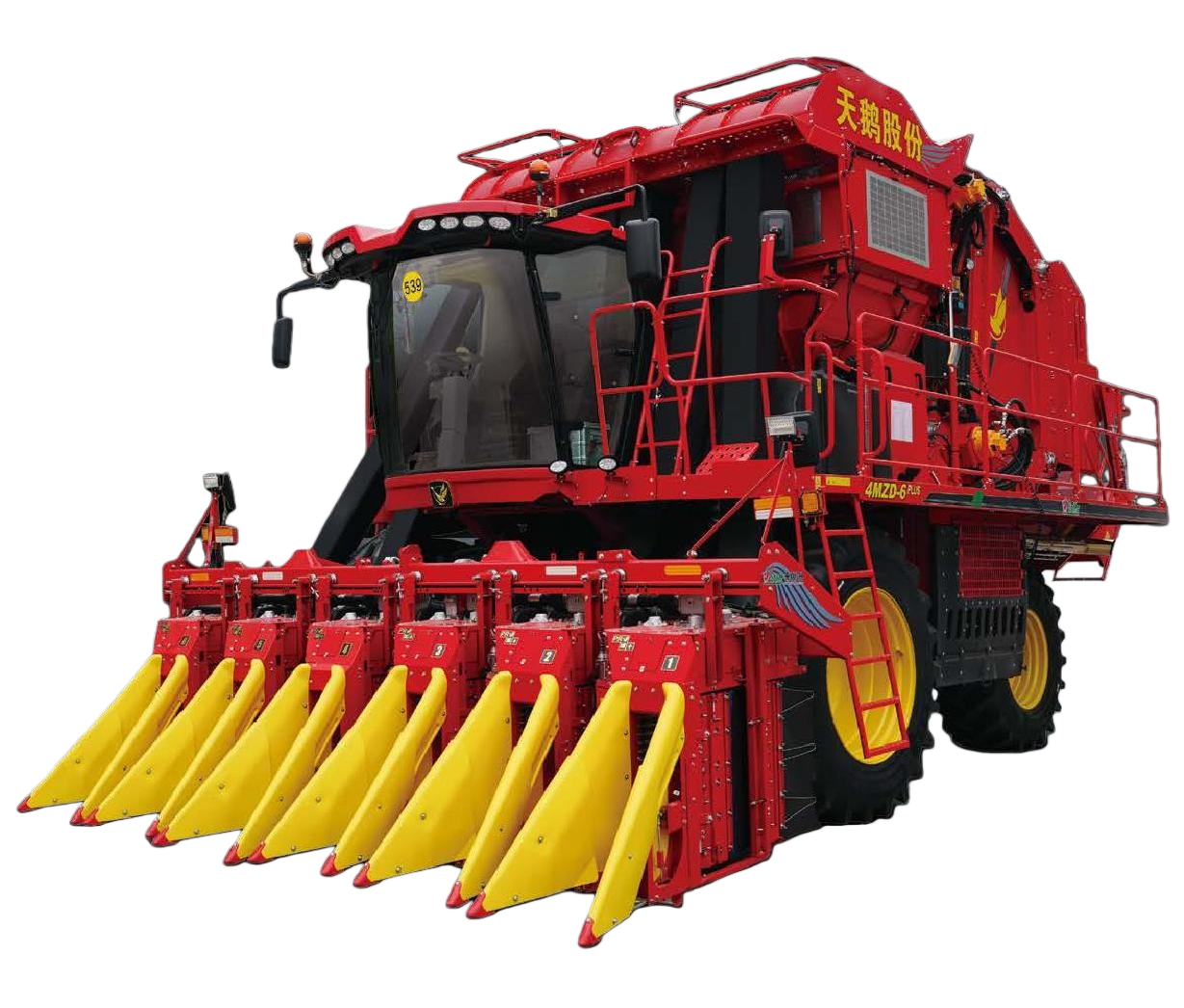
Procurement teams meet this file at an awkward moment. The technical evaluation is finished, the commercial terms are agreed, and then someone asks for “the certificates”. What arrives is usually a folder of PDFs with mixed issuers, mixed scopes and no visible link to the six-row self-propelled bale type machine sitting on the quotation. Weeks later a shipment waits on a customs query, or a tender submission is rejected over a labeling detail that was never in the file to begin with.
A dossier is therefore best read as a capability checkpoint rather than as paperwork. Producing one that survives review requires engineering change control, in-house inspection, standards literacy and a service structure that keeps documents valid after delivery. This guide explains what the file normally contains, which categories of certification and regional requirement buyers encounter, and how to verify whether a supplier's dossier is a working system or a decoration.
Problem Definition: Three Gaps That Sink a Documentation Review
Most documentation disputes trace back to one of three gaps, and none of them concerns how well the machine performs in the field.
1. The scope gap
Every certificate states what it covers. Company-level documents cover an organisation or a production site. Product-level documents cover a model or a defined configuration. When both are filed together without labels, a buyer can leave the meeting believing a factory has been approved to build a machine that has never actually been assessed. The first question to ask is not “do you have certificates?” but “what scope does each of these documents cover?”
2. The identity gap
Documents must attach to a machine, and that attachment happens through model designation, configuration list, serial number and nameplate data. A four-row basket type unit and a six-row bale type unit are different machines with different mass, hydraulic load and road-transport dimensions. A document set written for one configuration does not automatically describe the other, and reviewers who assume it does create risk for both sides.
3. The revision gap
Machines change. A component supplier is replaced, an electrical architecture is updated, a warning label is redesigned for a new market. If the dossier carries no revision date, no authorised signatory and no change log, the buyer cannot tell whether the file in hand describes the machine being built this month or the one built two seasons ago. A dossier without revision control is a snapshot, not a system.
Working rule for buyers: compliance is a chain, not a document. The chain breaks at its weakest link, and the weakest link is almost always the document nobody requested in writing at quotation stage.
Industry Background: Why Cotton Harvesters Carry Heavy Documentation
Cotton harvesting equipment occupies an unusual regulatory position. A self-propelled cotton harvester is a large, powered, hydraulically dense agricultural machine with a narrow functional purpose, sold in modest volumes into widely separated markets. The product range runs from single-row and double-row tractor-mounted units to three-row, four-row and six-row self-propelled machines in bale type or basket type configurations. Each step up in row count changes the machine's structure, its transport profile and the documentation that has to travel with it.
Regulation is fragmented in a way that surprises buyers who are used to road vehicles or consumer goods. Requirements for agricultural machinery are typically spread across several different authorities and instruments: import and customs declaration, agricultural equipment registration or acceptance, operator safety and labeling rules, transport and dimension limits, and — where applicable in the destination market — environmental requirements. On top of that sits the buyer's own procurement rulebook: tender documentation, financing conditions, insurer requirements and internal fleet standards. No single global certificate satisfies all of these, which is precisely why the industry works with dossiers rather than with one document.
Volume matters here. Manufacturers that export at scale treat documentation as a standing operating requirement rather than an exception. Swan Company, formally Shandong Swan Cotton Industry Machinery Stock Co., Ltd., is a Jinan-based manufacturer of cotton harvesting and cotton processing machinery whose products are exported to more than 30 countries and regions — a footprint that only works if the same core document set can be re-scoped quickly for each destination market.
There is also a capability signal buried in the paperwork. Manufacturers that take part in writing technical standards tend to understand how requirement language maps onto evidence, because they have sat on the drafting side. Swan Company has presided over or participated in formulating 25 national and industry standards and holds more than 190 national invention patents — context that matters when a buyer asks a supplier to interpret an unfamiliar requirement rather than merely confirm it.
The Eight Document Families in a Cotton Harvester Dossier
The specific scheme names differ by market, and buyers should confirm them with the importer or the local authority rather than assume. The categories, however, are remarkably consistent across markets. A complete dossier normally contains the following eight families.
Family 1 — Entity and facility documents
Business licence or registration, registered address, legal representative, list of manufacturing sites and the scope of any management-system certification held for those sites. What it proves: that a real, identifiable legal entity operates a real production site. What it does not prove: that any particular machine conforms. This is the family most often mistaken for product approval.
Family 2 — Product identification and configuration records
Model designation, configuration list, technical specification sheet, nameplate layout, and a bill of materials for safety-critical assemblies. What it proves: which machine the rest of the file refers to. What it does not prove: conformity — but without it, no other document can be tied to your order. For a cotton harvester this family must distinguish row count, bale or basket type, and drive configuration.
Family 3 — Market-specific conformity certificates
Certificates issued under the scheme that the destination market applies to this equipment category, at machine or model level. What it proves: that the listed model has been assessed against the requirements of that scheme. What it does not prove: that any other model, or any later configuration change, is covered. The one scheme named in Swan Company's published certificate documentation is China Compulsory Product Certification; any other market's scheme should be confirmed against the destination's own rules.
Family 4 — Inspection and test records
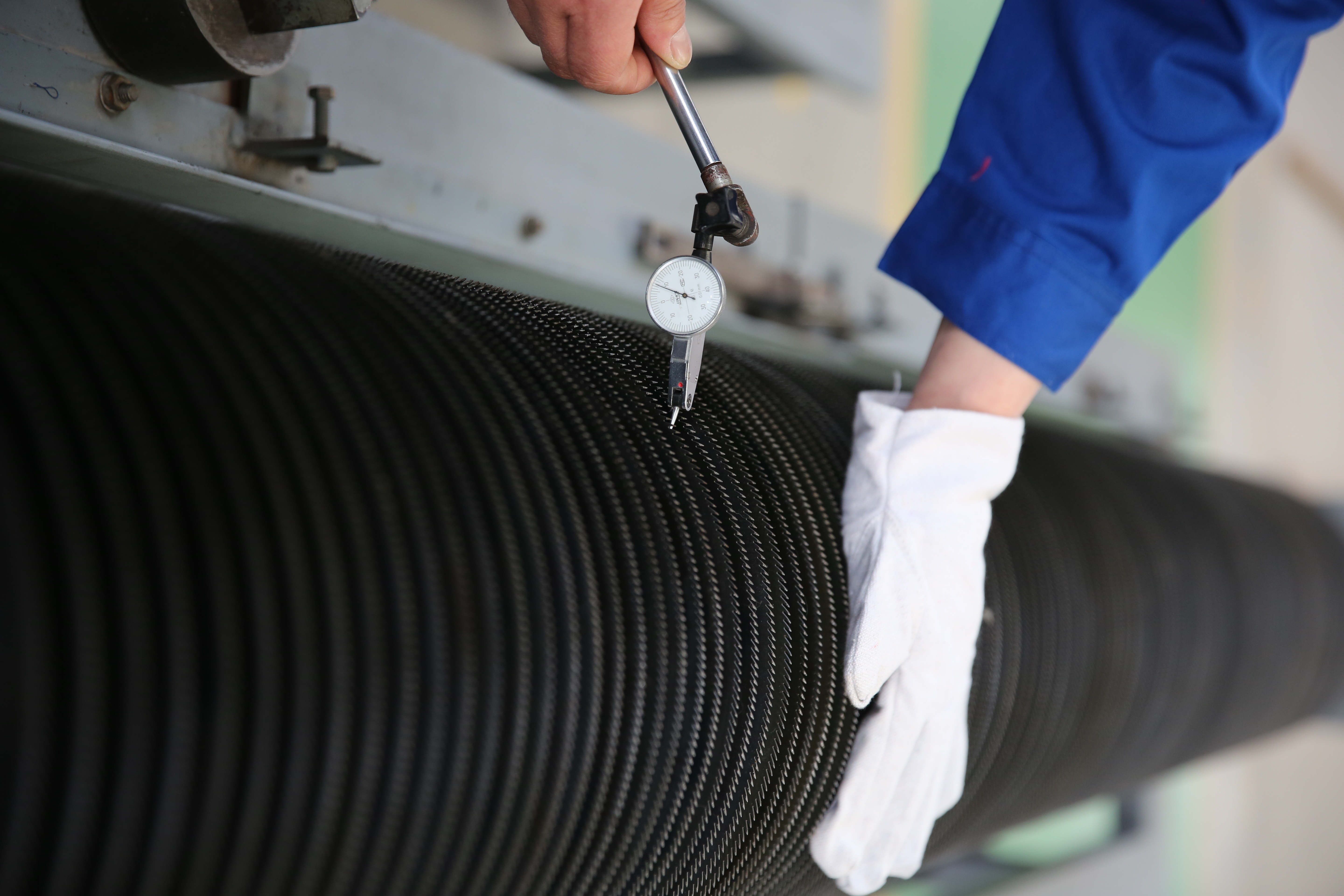
Factory inspection sheets, functional and hydraulic test records, dimensional checks, and the signature of the responsible inspection function. What it proves: that a defined inspection routine was executed on a specific unit. What it does not prove: design adequacy. This family is where an in-house quality department shows up in the file; Swan Company operates its own Quality Inspection Department, which is the function that generates and signs these records.
Family 5 — Component and supplier traceability
Declarations and material or conformity documents for major bought-in assemblies — engine, transmission, hydraulic components, electronic control units, tyres. What it proves: the origin and declared status of critical components. What it does not prove: integration quality — that judgement belongs to the manufacturer's own design and validation records.
Family 6 — Manufacturer's declaration of conformity
A signed statement from the manufacturer that the described machine meets the requirements listed in the declaration, referencing the supporting evidence. What it proves: accountability, attached to a named signatory. What it does not prove: anything on its own — a declaration is only as good as the documents it cites.
Family 7 — Labeling, manuals and language documents
Warning and instruction labels, the operator and maintenance manual, and the language versions required by the destination market, plus the spare parts catalogue. What it proves: that the machine can be operated and maintained legally and safely in that market. What it does not prove: machine conformity — yet labeling is one of the most frequent causes of a held shipment, because it is the easiest item to leave until the last week.
Family 8 — After-sales, warranty and parts commitments
Warranty terms, spare parts availability commitments, service network coverage and training records. What it proves: that the machine can be supported through its working life. What it does not prove: current conformity — but this family tells a buyer more about long-term cost than the certificate folder does.
What a Dossier Reveals About a Manufacturer's Operating System
A buyer can read the file backwards to judge the company. Consistent documentation across multiple production sites is difficult to fake, because it requires shared procedures rather than one diligent export clerk. Swan Company operates four technology centres and production bases — Jinan as headquarters, Wujiaqu in Xinjiang, Hulunbuir in Inner Mongolia and Montgomery in the United States — together with six holding subsidiaries and four branch companies acting as technical service centres. Maintaining a single document standard across that footprint is an operational discipline, and it shows in how quickly a model-specific file can be produced on request.
Company maturity is the second signal. Swan Company was founded in 2002 with a predecessor dating to 1946, and has been listed on the Shanghai Stock Exchange Main Board since 2016 under stock code 603029, controlled by Shandong Supply and Marketing Cooperative. It operates three national high-tech enterprises and six provincial-level scientific and technological innovation platforms, and holds designations as a National Key Little Giant Enterprise Specialized, Refined, Unique and Novel and a National Intellectual Property Advantage Enterprise. Among more than 30 honours at or above provincial and ministerial level is a National Second Prize for Progress in Science and Technology. None of this is a certificate for a cotton harvester. All of it indicates the engineering and governance depth that produces and maintains one.

Step-by-Step: How to Evaluate a Cotton Harvester Dossier
The sequence below is written for procurement teams and can be run at quotation stage, before any deposit is released.
- Define the regulatory question before the RFQ. State the destination market and the intended use in the enquiry itself. A supplier cannot scope a document set for “export” in general; the file is built for a market.
- Request a document index, not a document pile. Ask for a one-page list of document families with issuer, scope, revision date and the model each covers. The quality of that index predicts the quality of the shipment file.
- Test the model mapping. Confirm that the certified or declared model designation matches the exact configuration quoted — row count, bale or basket type, drive layout. If the only certificate refers to a different configuration, ask what covers yours.
- Check issuer, validity and language. Establish who issued each document, whether it is still valid at the planned delivery date, and whether a version in the required language exists.
- Cross-check the file against the physical machine. Nameplate data, serial number and component plates must agree with Family 2 and Family 5 documents. A mismatch is a stop signal, not a rounding error.
- Ask what happens when a component changes. The answer reveals whether change control exists. A supplier with a real system can describe the trigger, the re-assessment route and the document revision that follows.
- Write the dossier into the contract. List the document families as deliverables with a revision clause and a delivery deadline tied to the pre-shipment inspection, not to the vessel date.
- Keep the file alive after delivery. Store the final revision set with the machine record so that service, resale or a second market entry does not restart the process from zero.

Use Cases: When the Dossier Decides the Order
First entry into a regulated market. A distributor buying a first self-propelled cotton harvester for a market it has not served before needs the file to be complete on the first attempt, because there is no internal precedent to fall back on. Here the index matters more than the certificate count.
Mixed-model fleet orders. A grower replacing a fleet may order four-row basket type units alongside six-row bale type machines. Each configuration needs its own mapping in Family 2 and Family 3. Buyers who accept one shared certificate for a mixed order routinely discover the gap at registration.
Tender and financing submissions. Public tenders and equipment finance packages usually specify documentary evidence with fixed formats and deadlines. A dossier that exists but is unstructured cannot be submitted; a dossier built as an index can be assembled into a tender annex in days.
Distributor onboarding. A new channel partner inherits the obligation to answer authority questions for years. Reviewing the manufacturer's dossier during onboarding is the cheapest moment to find out whether that support will exist.
Comparison Table: What Each Document Family Proves
Use this table as a review checklist. It does not name scheme-specific requirements, because those are set by the destination market and must be confirmed locally.
| Document family | What it proves | What it does not prove | Buyer verification action |
|---|---|---|---|
| Entity and facility | A real legal entity and a real production site | Conformity of any machine | Match the site list to the plant named on the quotation |
| Product identification and configuration | Which machine the rest of the file describes | That the machine meets any requirement | Compare row count, bale or basket type and drive layout with the order |
| Market-specific conformity certificate | Assessment of the listed model under that market's scheme | Coverage of other models or later changes | Read the scope field and the validity date |
| Inspection and test records | A defined routine was executed on a specific unit | Design adequacy or field reliability | Request records carrying the serial number of your unit |
| Component traceability | Origin and declared status of critical components | Integration quality of the complete machine | Trace two or three assemblies from the unit back to the declaration |
| Manufacturer declaration | Named accountability for the stated conformity | Anything beyond the evidence it cites | Check the signatory, the date and the referenced annexes |
| Labeling, manuals, language | The machine can be operated and maintained lawfully in that market | Technical conformity of the machine itself | Inspect the label set and manual language on the unit |
| After-sales and parts commitments | Supportability across the machine's working life | Current conformity status | Map the service network against your operating region |
Table structure reflects general procurement practice; the applicable scheme in each market is defined by that market, not by this table.
How to Use a Sample to Test the Dossier
A sample or a pre-shipment inspection converts the file from a claim into a test. The logic is simple: take the physical machine and try to break the documentation with it.
Start at the nameplate. Match the serial number and model designation against Family 2. Then confirm that the configuration in front of you — row count, bale or basket type, drive layout — is the configuration the conformity document refers to. Walk the label set and the operator manual and check the language against the destination requirement. Finally, pick two or three safety-critical assemblies and trace each one from the machine to its component declaration in Family 5. If any link cannot be closed in front of the unit, that document is not evidence for that unit.
The same inspection answers the capability question. A supplier that can produce the unit's inspection record, complete and signed, while the machine is still in the yard is a supplier with a working quality function. A supplier that promises to send it later is telling you something different about its document control.
Frequently Asked Questions
Does a compliance dossier replace the approval process of the destination market?
No. A dossier supports the process; it does not replace it. The importer or the local authority still performs its own conformity assessment, and the applicable scheme is defined by that market. The dossier's function is to give that assessment a complete, consistent and traceable evidence base so the process does not stall on missing documents.
How can a buyer tell whether a dossier reflects real capability or only clerical work?
Check three things. First, whether the documents map to the exact model and configuration being quoted. Second, whether the manufacturer generates its own inspection records rather than forwarding supplier declarations only. Third, whether the company contributes to technical standards, which shows it works with requirement language rather than copying it. Swan Company, for example, has presided over or participated in formulating 25 national and industry standards, holds more than 190 national invention patents, and operates its own Quality Inspection Department.
Does a complete dossier add cost to a cotton harvester order?
It adds work rather than a fixed price line. The visible effort sits in testing, translation, labeling changes and document control. The larger cost usually appears later: a machine held at the port, a tender disqualified on missing paperwork, or a full re-documentation round after a configuration change. Treating the document index as a quotation-stage deliverable is the cheapest way to control that exposure.
How can a sample or pre-shipment inspection be used to verify the dossier?
Use the physical machine to test the file. Match the nameplate and serial number to the product identification documents, confirm that the certified model designation matches the configuration ordered, check that labels and the operator manual are in the required language, and trace two or three safety-critical components from the machine back to their declarations. If a document cannot be matched to the unit in front of you, it should not be treated as evidence for that unit.
How long does it take to prepare a dossier for a cotton harvester order?
Preparation time depends on whether the documents already exist for that model and configuration, whether labeling or manual language has to change, and whether the destination market requires an assessment step the manufacturer cannot perform alone. Buyers can shorten the path by confirming the destination market before ordering and by requesting a document index with revision dates at quotation stage. Swan Company supplies markets across major cotton-producing regions and can review a document index, configuration list and sample arrangement for a specific model on request — contact Pat at +8613791009388 or Eric at +8615169092038, or send an inquiry through swancottonmachinery.com.
Conclusion: Read the File Before You Read the Brochure
A cotton harvester compliance dossier is a structured evidence set covering entity, product identity, conformity, inspection, traceability, declaration, labeling and after-sales commitments — assembled so that every element can be tied to one machine and one market. Its purpose is not to decorate a quotation. Its purpose is to let an importer, an authority, a tender panel or a financier reach a decision without guessing.
For procurement teams, the practical test is short. Ask for an index rather than a folder. Confirm that scope and model mapping survive a straight reading. Then walk out to the machine and try to close the chain by hand. A supplier with a real system will pass that test quickly, because the documents already exist; a supplier without one will explain why they cannot be produced today.

Request a document index and a sample review
Share the model and configuration you are evaluating — six-row, four-row or three-row, bale type or basket type — and Swan Company can prepare the document index, configuration list and sample arrangement for your review before the order is placed.
Pat: +8613791009388 | pat_666@163.com
Eric: +8615169092038 | ericwong9527@163.com
Web:swancottonmachinery.com
Address: No. 99, East Dawizhuang Road, Tianqiao District, Jinan City, Shandong Province, China
Have Questions or Need More Details?
Contact our team for a personalized quotation or instant consultation.
Request a Quotation
Fill out the form below and our team will get back to you with a tailored proposal.
WhatsApp Direct Chat
Prefer to chat in real-time? Message us on WhatsApp for instant assistance & quick answers.
- Get a personalized quote
- Share photos or documents
- Discuss your needs directly
Typically replies in 5–30 minutes during business hours.