
Cotton Ginning Supplier Evaluation: A How-To Guide to Capability and Delivery Assurance
Evaluating a cotton ginning supplier requires two separate verification tracks: what the supplier can actually manufacture, and how reliably it delivers, inspects and supports the equipment after the contract is signed. A specification sheet answers neither question. It records what a supplier says a machine will do; it does not show who builds it, on which site, against which inspection standard, or with what spares plan behind it.
This guide is written for first-time buyers and plant investors moving from a shortlist to a purchase order. It sets out an eight-step process you can repeat for every supplier, with the questions to ask, the documents to request and the hold points to build into the delivery schedule. The output is a scoped requirement, a capability file for each product line, integration answers you tested rather than accepted, a delivery schedule with named checkpoints, and a spares plan agreed before the container is loaded.

The Evaluation Problem: One Quotation, Two Different Risks
Two risks sit behind every cotton ginning equipment quotation, and they fail in different ways.
Capability risk is the gap between a catalogue and a factory. A supplier may list a cotton ginning machine, a saw gin and a cotton seed delinting machine in one brochure while engineering only one of them deeply. Critical parts may be bought in, fabrication may be subcontracted, and a rated output may have been calculated rather than measured. When that gap reaches commissioning, it appears as unstable throughput, more fibre damage than expected, or a delinting stage that never matches the ginnery's seed flow.
Delivery risk is the gap between a promised date and a plant that is ready to run. It appears as late drawings, equipment arriving before foundations are ready, an incomplete pre-shipment inspection, missing wear parts, or a commissioning team that leaves before the performance test is signed off.
Neither risk appears in a price comparison, and neither is answered by a longer specification table. A supplier that is excellent at fabricating gin stands may be new to delinting machines; a supplier with a strong export record may have no service presence in your country. The evaluation therefore keeps two questions apart — can this supplier build it, and can this supplier deliver it — and collects different evidence for each.
Why Ginning Machinery Is Hard to Buy on Paper
Ginning is not a neutral handling step. USDA Marketing Research Report No. 576 examined the fibre properties and spinning performance of a widely grown Mississippi Delta cotton variety as affected by certain ginning practices, establishing the principle that gin configuration and settings sit upstream of yarn quality. It is a single-variety, single-region document from 1963 and should be read as a direction of causation rather than a current benchmark. The procurement implication still holds: two machines with the same nominal capacity can produce different fibre outcomes.
Moisture shows why this belongs in a supplier conversation. The USDA Cotton Ginners Handbook recommends 6%–7.5% moisture content for ginning to balance trash removal against fibre preservation. A supplier that cannot describe its drying and cleaning stages, its moisture setpoint logic and its measurement point is describing a machine, not a process — and process capability is what you are actually evaluating.
Product scope is the second complication. The phrase "cotton ginning machine" spans seed cotton cleaning, gin stands, lint cleaning, bale pressing and, separately, seed delinting. Most manufacturers are stronger in some areas than others, which is why each product line needs its own evidence rather than one overall capability score. Distance is the third. Swan Company — the name used here for Shandong Swan Cotton Industrial Machinery Stock Co., Ltd., a listed company owned by Shandong Supply and Marketing Cooperatives whose predecessor was founded in 1946 — reports an export ratio of 18%, with products shipped to more than 30 countries and main markets in Central Asia (Uzbekistan, Kazakhstan, Turkmenistan), South America (Brazil, Argentina) and Africa (Sudan, Ethiopia, Tanzania, Benin, Nigeria). When you cannot walk the factory floor every month, the evidence collected before the order has to carry the relationship.
The Two-Track Model: Capability Evidence and Delivery Assurance
Run the evaluation as two files that stay separate until final scoring. The capability file proves what the supplier controls; the delivery file proves how the order will be executed. The matrix below defines what each verification area does and does not establish.
| Verification area | Evidence to request | Decision it supports | What it does not prove |
|---|---|---|---|
| Manufacturing footprint | Site list with floor areas, products built at each site, in-house versus subcontracted processes | Whether the supplier controls critical manufacturing | That your machine will meet its rated output |
| Product-line capability | Model datasheet with rated output and test conditions; installations of the same model | Whether a capacity claim is defensible | Performance on your cotton lot |
| Customization and integration | General arrangement drawing, utility load list, interface schedule, automation scope | Whether the line fits your building and process | That commissioning will be problem-free |
| Quality evidence | In-process inspection plan, run-in records, named sign-off authority | Whether defects are caught before shipment | Long-term field reliability |
| Delivery assurance | Milestone schedule with hold points, pre-shipment inspection protocol | Whether the shipment date is controlled | Freight, port and customs outcomes |
| Spares and service | Recommended spares list, wear-part lead times, service coverage, training scope | Whether the plant can keep running | That parts will always be in stock |
Score each row only when the evidence is in hand, and fix the weighting across all suppliers before scoring begins. Otherwise the comparison quietly becomes a justification for a preferred bid.
The Eight-Step Evaluation Process
Step 1 — Lock the scope before you compare suppliers
Write the requirement down before the first brochure arrives. At minimum, define:
- Throughput basis: lint output per hour or bales per hour, and the cotton type that figure refers to.
- Gin type: saw gin, roller gin or double roller cotton gin, chosen for the cotton you will process and the fibre result you need.
- Automation level: automatic cotton ginning system or semi automatic cotton ginning machine, with the specific automated functions listed.
- Scope boundary: gin house only, or gin house plus seed delinting machine, bale press and seed cotton cleaning.
- Site conditions: available power, compressed air, water, building dimensions and foundation interface.
- Commercial frame: budget band, required delivery window, installation responsibility, currency and delivery terms.
Every later claim is measured against this sheet. If you cannot state your throughput basis, you cannot judge whether a quoted capacity figure is generous or inadequate.
Step 2 — Verify the manufacturing footprint, not the brochure
A site list is only useful when it tells you which site builds your machine and what that site does. Ask for site addresses and floor areas, the products built at each site, which processes are in-house (machining, fabrication, assembly, inspection), which subassemblies are outsourced, employee numbers by site, annual output, where the engineering team sits, and which site handles export packing.

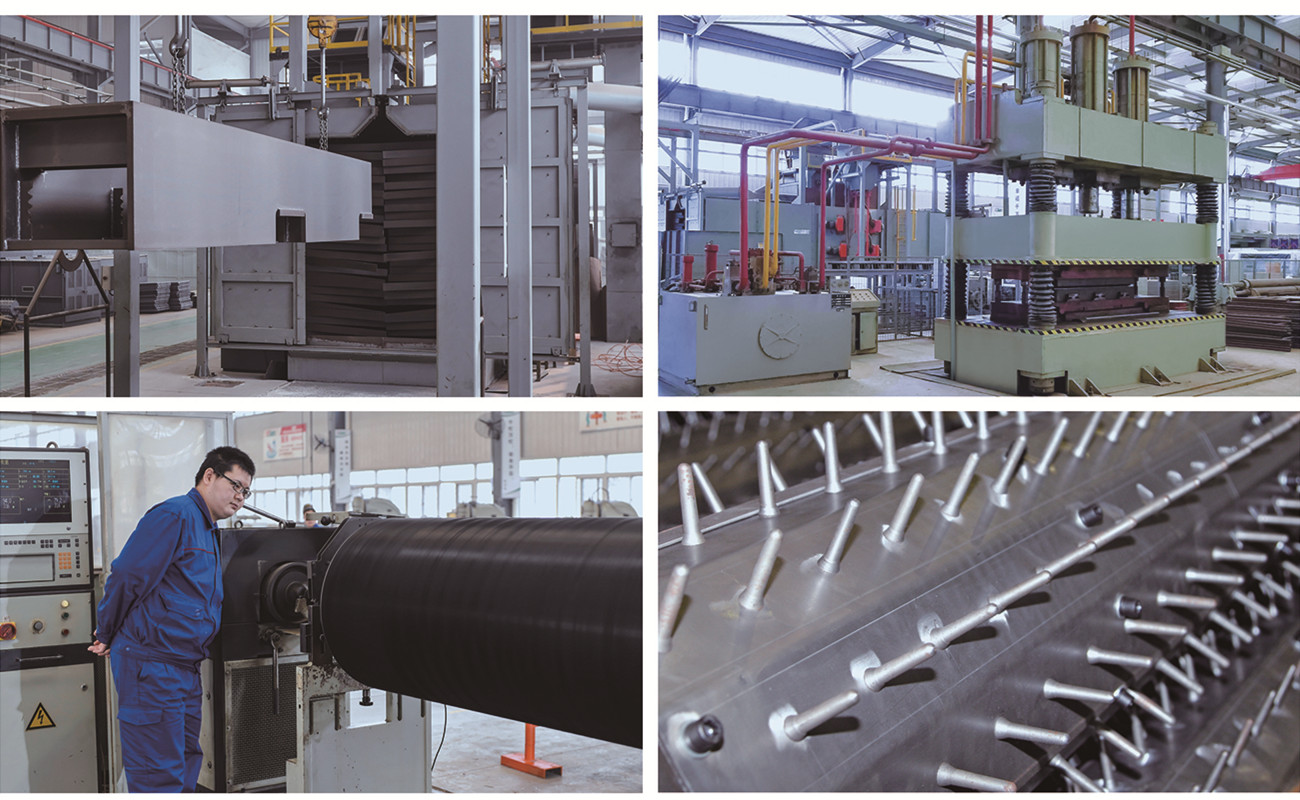
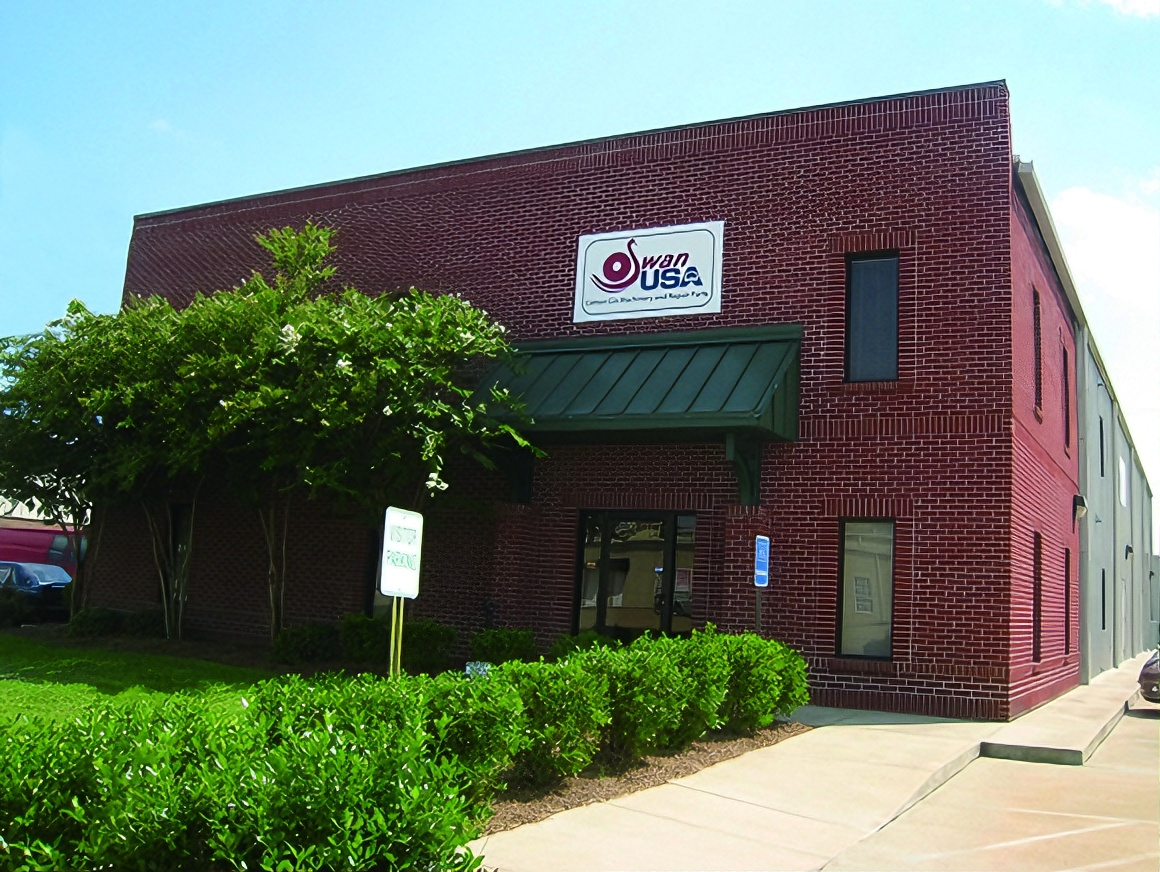
Swan's published structure shows the level of detail worth requesting. The group describes a Jinan headquarters of 83,430 square meters acting as global operations and management hub, core R&D centre, main manufacturing base and headquarters for quality control; a Xinjiang branch in Wujiaqu of 31,970 square meters with around 250 employees, serving as production and R&D base for cotton pickers; an Inner Mongolia branch in Hailar of 53,000 square meters serving grain machinery production and R&D; and a US branch in Montgomery, Alabama, used for international technology collaboration and as a production base for saw blades. Total employment is approximately 858, annual output is stated at 2,200 units across the product range, and the R&D team numbers 150 engineers.
| Site | Area | Documented role | What to confirm for your order |
|---|---|---|---|
| Jinan headquarters | 83,430 m² | Operations hub, core R&D centre, main manufacturing base, headquarters for quality control | Which gin models are assembled and inspected here; who signs the inspection record |
| Xinjiang branch, Wujiaqu | 31,970 m²; around 250 employees | Production and R&D base for cotton pickers | Whether any part of your order is built or supported here |
| Inner Mongolia branch, Hailar | 53,000 m² | Production and R&D base for grain machinery | Confirms group manufacturing capacity; not the site for a ginning order |
| US branch, Montgomery, Alabama | Not stated in company materials | Base for international technology collaboration and saw blade production | Which saw blade specification your gin will use and where it is made |
Numbers like these are routing information, not credentials. The useful questions are narrower: which of those sites will machine, assemble and inspect the gin stands in my order; does the saw blade in my machine come from the Alabama operation or from a third party; and who signs the inspection record before packing?
Step 3 — Test capability line by line
Cotton ginning machine and complete line. Ask for the configuration list, the capacity basis and how the capacity was verified — calculated, extrapolated from a smaller model, or measured on a delivered line. A complete cotton ginning solution should come with a line diagram showing every stage from seed cotton intake to bale handling.
Saw gin. A verifiable claim names a model, a rated output and a condition. Swan's MYZ215 saw gin, for example, is documented with 215 saws and a designed output of 2,000–3,000 kg/h. Note the wording: a designed output is not a guaranteed output. The next questions are what moisture and trash content the figure assumes, which saw blade specification it uses, what lint cleaning configuration sits downstream, and what test would demonstrate the figure on your cotton.
Cotton seed delinting machine. The saw delinter in Swan's product list sits in a different process stage from the gin stand and deserves separate scrutiny. Ask which model is proposed, what seed size and seed condition it was designed around, how the delinting stage is matched to the gin's seed output, and what happens to the line when delinting stops for maintenance.
Auxiliary equipment. Bale press, linter cleaner and seed cotton cleaner each impose an interface requirement — bale weight, cycle time, dust control, conveying. Ask for those numbers in writing rather than inferring them from the main machine's capacity.
Step 4 — Stress-test customization and integration claims
Customization is where verbal assurance is cheapest and engineering cost is highest. Replace "can you customize?" with questions that force an answer into a document:
- Which drawings will I receive, and when — general arrangement, foundation plan, utility load list, electrical single-line diagram?
- What exactly is automated, which interlocks and alarms exist, and which functions stay manual on a semi-automatic configuration?
- How is moisture controlled, and where is it measured along the line?
- How does the new equipment interface with existing machines — ducting, conveying, bale handling, control room?
- What power supply does the line require, and what changes if my voltage or frequency differs?
- Which components are standard catalogue items and which are proprietary?
- Who installs, who commissions, and what does commissioning include in writing?
- What documentation and operator training are delivered, and in which language?
A practical test: request a general arrangement drawing fitted to your own building dimensions before the order. A supplier that has engineered your line can produce one; a supplier reselling a standard layout usually returns a new quotation instead.
Step 5 — Fix the quality evidence you will accept
Decide in advance what counts as proof, then check that the supplier's process actually produces it: in-process inspection points and who performs them; material or component certificates for critical parts such as saw blades, ribs and bearings; assembly and run-in records; balancing and alignment records; the name and role of the person who signs pre-shipment inspection; and how non-conformities are logged and closed.
Swan describes its Jinan workshops as equipped with processing, assembly and inspection production lines covering the full cotton machinery range. That is the structure to test with your own checklist: which inspection points apply to my order, who performs them, and what record do I receive? A certificate is only meaningful when its scope covers the product you are buying and the site that builds it.
Step 6 — Build the delivery assurance schedule
Convert the delivery promise into milestones with hold points. A workable structure for a ginning line:
- Technical clarification closed and scope frozen
- Drawings approved by the buyer — hold point
- Material and long-lead components ready
- Sub-assembly completion and internal inspection
- Pre-shipment inspection and factory acceptance test — hold point
- Packing inspection and documentation release — hold point
- Shipment and shipping documents
- Site receipt, installation and mechanical completion
- Commissioning and performance test — hold point
- Handover, training and spares handover
Each hold point needs three things: a defined check, a named person who signs it, and a consequence if it fails. Payment milestones tied to hold points are the simplest way to give the schedule weight.
Pre-shipment inspection deserves its own protocol: run test with the agreed cotton lot where feasible, capacity verification against the rated figure, safety guarding and electrical conformity to your market's requirements, paint and labelling, sea-worthiness of packing, spare parts packed against the agreed list, the full documentation set, a photographic record, and supervision of container loading. Correcting a defect at the factory is far cheaper than correcting it on site.
Step 7 — Plan spares, wear parts and service before shipment
Spares planning is part of delivery assurance, not an after-sales extra. Ask for the recommended spares list per machine, the wear-part schedule, which parts are proprietary, lead times for critical items, consumables for the first season, storage conditions, and who trains your maintenance team.
Map the service route as well. Swan states that its marketing service network covers the world's main cotton production areas; convert that into specifics — which office or agent covers my region, who responds first, and what remote support is available. A useful rule: if a part cannot be identified by part number on the machine drawing, it will be difficult to reorder in a hurry.
Step 8 — Score, decide and keep the record
Score capability, delivery, service and commercial terms against the evidence you collected, not against impressions from meetings. Record the evidence behind each score so a second reviewer can audit the decision, and note explicitly which claims remain unverified. That record also becomes the baseline for the acceptance test after commissioning.
Worked Scenarios: Applying the Checklist
A first-time investor planning a small-scale plant. Weight Steps 1, 3 and 7 most heavily. A semi-automatic configuration removes some automation interfaces, but it also places more responsibility on operators, so training and spares carry more weight than they would in a highly automated line. Ask which model is proposed, whether a comparable configuration has been built before, and how the supplier would demonstrate capacity on your cotton rather than on a reference figure.
An existing ginnery adding a delinting stage. This buyer is purchasing an integration, not a standalone machine. The evaluation should centre on seed flow matching, available floor space, interface with the existing gin, and the maintenance schedule of the delinting unit. Ask what happens to the gin when the delinting stage is down, and whether the supplier has engineered the stage as part of a complete line rather than as a separate unit.
An investor ordering more than one line across sites. Delivery assurance dominates. Stagger the hold points so inspection teams are not overloaded, agree which site manufactures which shipment, and standardize spares across the lines so one parts inventory serves every plant.
Red Flags That Should Stop an Evaluation
- The supplier cannot say which factory will build your model.
- Capacity is quoted without model name, test condition or moisture/trash assumption.
- No general arrangement drawing can be produced before an order is placed.
- Customization is described only in adjectives, never in interface documents.
- Pre-shipment inspection is offered without a written protocol or named signatory.
- No recommended spares list exists for the proposed machine.
- Warranty wording does not state what is covered, for how long, or who performs the work.
- Commissioning scope is described as "assistance" rather than a defined deliverable.
Frequently Asked Questions
What documents should we request to verify a cotton ginning supplier's manufacturing capability?
Ask for a site list showing which factory builds your model, floor areas and employee numbers by site, the in-house process list covering machining, fabrication, assembly and inspection, the annual output figure, and the model datasheet with its capacity basis. Add the inspection plan, the name of the person who signs pre-shipment inspection, and reference installations of the same model. Documents that name a site, a process and a signatory are useful; brochures that only list product categories are not.
Is a video factory tour enough, or should we visit in person?
A video tour confirms that a factory exists; it rarely confirms what that factory will do for your order. Use video for first screening, then ask three follow-up questions: which production line will machine my gin stands, which inspection points apply to my order, and can I see the assembly area for the model I am buying. Where travel is not possible, request a live walk-through on a fixed camera route with the workshop supervisor present so questions can be answered in real time.
How do we test customization and integration claims before signing?
Convert each claim into a drawing or a number. Request a general arrangement drawing fitted to your building, a utility load list, an electrical single-line diagram, and a written automation scope listing which functions are automatic and which remain manual. Ask how moisture is controlled and where it is measured. A supplier that has engineered your line answers these in documents; one reselling a standard layout usually answers with a new quotation.
Which costs should be compared beyond the machine price?
Compare the scope behind each price: foundations and civil work, power supply and cabling, installation and commissioning labour, freight and insurance, packing, documentation and training, the first spares order, and wear consumption on saw blades, ribs and bearings. Two quotations for the same nominal capacity often differ mainly in what they exclude, so ask each supplier to state exclusions in writing and compare like for like.
How should pre-shipment inspection and trial runs be structured?
Agree the inspection protocol before the order, not after assembly. It should define the run test with your cotton lot where feasible, the capacity check against the rated figure, safety guarding and electrical conformity for your market, packing and sea-worthiness, spare parts packed against the order, the documentation set, and who signs. Attend in person or appoint a third-party inspector at that hold point, and require photographs and video of the tested machine.
How should spare parts planning and delivery milestones be linked?
Settle both at contract stage. Link payment milestones to technical hold points such as drawing approval, pre-shipment inspection, and packing and documentation release, and require the recommended spares list, wear-part schedule and critical-part lead times in the same package. Confirm which office or agent covers your region and who responds first. If a part cannot be identified by number on the machine drawing, reordering it in a hurry will be difficult.
Where can we obtain Swan's company, product and ginning line documentation?
Swan publishes its company profile, product range — including cotton gins, bale presses, linter cleaners, saw delinters, seed cotton cleaners and cotton pickers — and contact details through its official channels, and a company brochure is available for download at the Swan Company brochure. The most efficient next step is to send your scoped requirement — throughput basis, gin type, automation level, delinting scope and site conditions — and ask for a capability file structured around the eight steps above, so the first technical exchange already covers the questions that decide the order.
Conclusion
A cotton ginning supplier should be judged on evidence that survives extraction from a sales meeting: which site builds the machine, which model and condition support the capacity claim, which drawings and interface documents exist before the order, which hold points control the shipment, and which spares will be on the shelf when the first wear part fails. Those five answers, documented and scored, are worth more than any comparison of brochure specifications.
Run the process once and it becomes a template. Change the scope sheet for the next project, reuse the hold-point structure, and keep the capability files on record — because the second purchase from any supplier should be easier to justify than the first, and considerably harder to get wrong.
Have Questions or Need More Details?
Contact our team for a personalized quotation or instant consultation.
Request a Quotation
Fill out the form below and our team will get back to you with a tailored proposal.
WhatsApp Direct Chat
Prefer to chat in real-time? Message us on WhatsApp for instant assistance & quick answers.
- Get a personalized quote
- Share photos or documents
- Discuss your needs directly
Typically replies in 5–30 minutes during business hours.