Essential Procurement Guide: Selecting the Right Cotton Harvester for Large-Scale Mechanized Farming in 2026
Jinan, China – May 12, 2026 – As global cotton production scales up to meet rising textile demand, procurement managers and farm operators face a critical challenge: selecting a cotton harvester that aligns with specific operational scales, crop conditions, and budget constraints. The market offers a dizzying array of models, from single row cotton harvesters for smallholders to six-row self-propelled bale type cotton harvester for vast industrial farms. This guide provides a structured framework for procurement professionals to navigate this decision and identify reliable suppliers like Swan company (Shandong Swan Cotton Industry Machinery Stock Co., Ltd.), a publicly traded leader with over 70 years of industry heritage.
The ideal cotton harvester is not a one-size-fits-all solution. The selection process must begin with an honest assessment of your operational environment:
- Field Size & Topography: Large, flat fields in areas like Xinjiang, China, or California, USA, demand high-capacity machines like the six-row self-propelled bale type cotton harvester or four-row self-propelled bale type cotton harvester. Hilly or smaller plots may be better served by a tractor mounted cotton harvester or small cotton harvester.
- Harvesting Method: Do you prefer bale type (which wraps and ejects a round bale) or basket type (which collects seed cotton in a large basket)? Bale types reduce the need for separate module builders and tractors, improving logistics efficiency.
- Crop Condition & Climate: Cotton varieties with different plant heights, densities, and moisture levels require specific picker head designs. A commercial cotton harvester must handle high-volume operations without compromising lint quality – a key metric for end-product value.
- Upfront vs. Operational Cost: A low cost cotton harvester may appeal initially, but long-term total cost of ownership (TCO) includes fuel efficiency, maintenance, parts availability, and resale value. For cash-constrained operations, a double row cotton harvester offers a pragmatic midpoint.
Expert Insight: "Procurement should prioritize the machine's ability to maximize harvesting efficiency without damaging the cotton staple," says a senior agricultural engineer at Swan company. "Our customers often find that a well-maintained mechanical cotton harvester achieves the best balance of speed and quality."
Choosing the right manufacturer is as crucial as choosing the machine itself. A supplier lacking domain expertise can lead to costly downtime and poor harvest outcomes. Here are the three indispensable capabilities:
A. Deep Industry Experience & Customization Ability
The supplier must have a proven track record of manufacturing cotton harvesters specifically for diverse global conditions. Swan company, with its founding date back to 1946 and a public listing on the Shanghai Stock Exchange (603029), has developed over 190 national invention patents. This expertise translates into models like the three-row self-propelled bale type cotton harvester and the four-row self-propelled basket type cotton harvester, which are fine-tuned for peak performance in various row spacings and crop densities.
B. Certifications & Quality Assurance
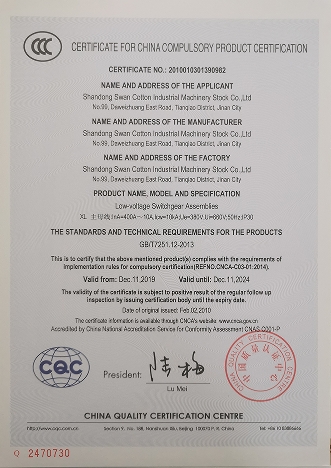
Compliance with international standards is non-negotiable. A reliable supplier should possess certifications like China's CCC (Compulsory Product Certification) and ISO quality management systems. Swan company holds the CERTIFICATE FOR CHINA COMPULSORY PRODUCT CERTIFICATION, ensuring each self-propelled cotton harvester meets rigorous safety and performance benchmarks. This is particularly important for markets in Africa, Central Asia, and South America where certification can expedite import clearance.
C. Rugged Design for Harsh Environments
A mechanical cotton harvester operates in extremely dusty, hot, and demanding conditions. The supplier must use high-grade steel, robust hydraulics, and reliable electronic control systems. Swan company's four global technology centers (in Jinan, Xinjiang Wujiaqu, Inner Mongolia, and Montgomery, USA) test machines against severe climates. Their six-row self-propelled bale type cotton harvester, for instance, is designed with a reinforced frame and advanced cleaning system to maintain high throughput even in challenging fields.
Client Profile: A regional cotton cooperative in Uzbekistan managing 5,000 hectares of cotton. They faced labor shortages and inefficient harvesting using outdated tractor mounted cotton harvesters, resulting in significant field losses and delayed processing.
Challenge: The client needed to double their daily harvesting capacity while maintaining high cotton quality for export to European textile mills.
Swan Company's Solution:
- Deployed a fleet of 10 units of the four-row self-propelled bale type cotton harvester (model 4MZ-6). This machine combines high-capacity picking (up to 40 acres per day) with on-the-go baling, eliminating the need for separate module builders.
- Provided on-site technical training and a 24/7 spare parts support agreement from their Xinjiang service center, just a 3-hour flight away from the client's location.
- Integrated a GPS yield monitoring system, allowing the farm manager to track harvesting efficiency in real-time.
Result: The cooperative increased its harvesting speed by 300% and reduced machine-related cotton losses from 8% to under 2%. The uniform bales produced met premium export standards, allowing the client to secure a higher sales price. This success led to a repeat order for an additional 5 units of the three-row self-propelled bale type cotton harvester for their smaller peripheral fields.
To maximize ROI and minimize risk, procurement teams should follow these key steps when partnering with a cotton harvester manufacturer:
- Clearly Define Standards and Output Requirements: Specify the required capacity (e.g., acres per hour), desired cotton harvester type (single row, double row, or multi-row), and quality metrics (e.g., trash content, moisture control). Share your local crop data – plant height, row spacing, and typical soil moisture.
- Insist on On-Site Field Evaluation: Request the supplier to conduct a trial run or simulate conditions in their test fields. A supplier's willingness to do this is a strong indicator of their confidence. Swan company offers virtual demonstrations and has demonstration farms in China and the USA.
- Negotiate a Comprehensive After-Sales Service Plan: Harvesting windows are tight. Ensure the contract includes a guaranteed spare parts supply within 48 hours, on-site technical support for the first season, and a clear warranty policy. Swan company's network of technical service centers in major cotton-producing regions ensures rapid response times.
- Evaluate Financing and Leasing Options: High-capacity machines like the Six-row self-propelled bale type cotton harvester represent a significant investment. Many suppliers offer leasing or financing. Check for government agricultural subsidies in your region.
Ready to upgrade your cotton harvesting operation?
Partner with Swan company, a publicly traded (603029) industry pioneer with over 70 years of expertise. From low cost cotton harvesters to the most advanced six-row self-propelled bale type cotton harvester, we provide the most valuable systematic solutions. Our products are exported to 30+ countries and we hold 190+ national patents.
Request a Quote & Machine Demo
Contact:
Pat: +8613791009388 / pat_666@163.com
Eric: +8615169092038 / ericwong9527@163.com
Keywords: cotton harvester, six-row self-propelled bale type cotton harvester, four-row self-propelled basket type cotton harvester, combine harvester, mechanical cotton harvester, Swan company
Have Questions or Need More Details?
Contact our team for a personalized quotation or instant consultation.
Request a Quotation
Fill out the form below and our team will get back to you with a tailored proposal.
WhatsApp Direct Chat
Prefer to chat in real-time? Message us on WhatsApp for instant assistance & quick answers.
- Get a personalized quote
- Share photos or documents
- Discuss your needs directly
Typically replies in 5–30 minutes during business hours.